
Client
Issues
Despite robust overall growth, the e-commerce company faced uncertainties about its customers’ evolving needs and motivations. The Indonesian market’s consumer base is highly dynamic, with millions of new internet shoppers coming online and trends that can shift rapidly due to social media influence. The client found that some product categories were underperforming without clear reasons, while competitors were succeeding in capturing the attention of key demographics like young adults. Customer feedback data existed in the form of reviews and support inquiries, but it had not been systematically analyzed for insights. Additionally, the marketing team was unsure if their campaigns were effectively targeting the right segments with relevant messages, as conversion rates had plateaued. With increasing competition in the e-commerce space, the company needed a clearer picture of consumer behavior – who its customers are, what drives their purchases, and how to increase repeat business – to stay ahead in the market.
Solution
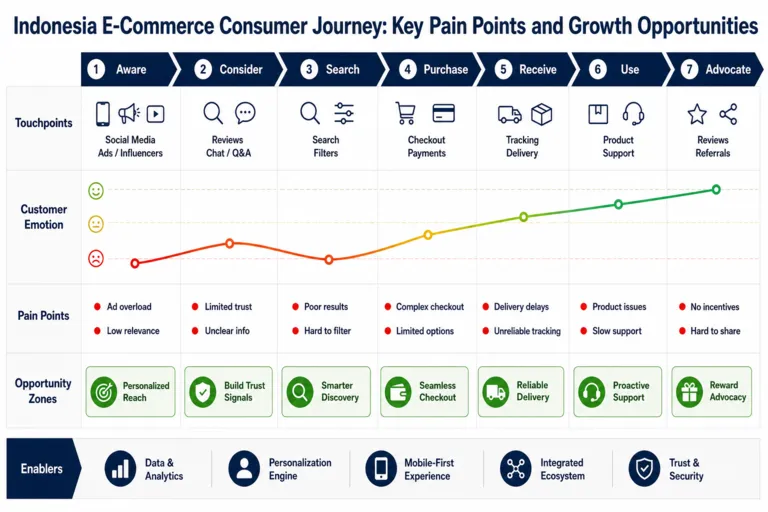
Eurogroup Consulting executed a comprehensive consumer behavior analysis combining data analytics, customer research, and market trend examination. The solution began with data mining of the client’s transactional database to segment customers based on purchasing habits, frequency, average spend, and product preferences. This quantitative analysis identified distinct customer segments (for example, bargain hunters, tech enthusiasts, young fashion trendsetters, etc.) and their respective behaviors on the platform. Next, the consulting team carried out qualitative research: online surveys and virtual focus group discussions with customers from various segments to delve into their motivations, pain points, and influences (such as social media, reviews, or word-of-mouth). The analysis also looked at external market trends using social listening tools to track what Indonesian consumers were saying about popular products or brands on social networks. Eurogroup Consulting overlaid these insights to create detailed customer personas and journey maps highlighting how different types of customers discover products, what factors influence their decision to buy (like price, brand reputation, or convenience), and their post-purchase satisfaction drivers. With these findings, the solution provided targeted recommendations for the client’s product strategy – such as adjusting the product mix to include more of the items rising in demand for certain segments, or improving product information and reviews for categories where consumers seek more assurance. Additionally, the marketing strategy was refined: personalized marketing campaigns were designed for each key segment, aligning messaging with their interests and preferred channels (for instance, flash sale alerts for bargain hunters via mobile app notifications, or content-rich social media campaigns for lifestyle-oriented shoppers).
Approach
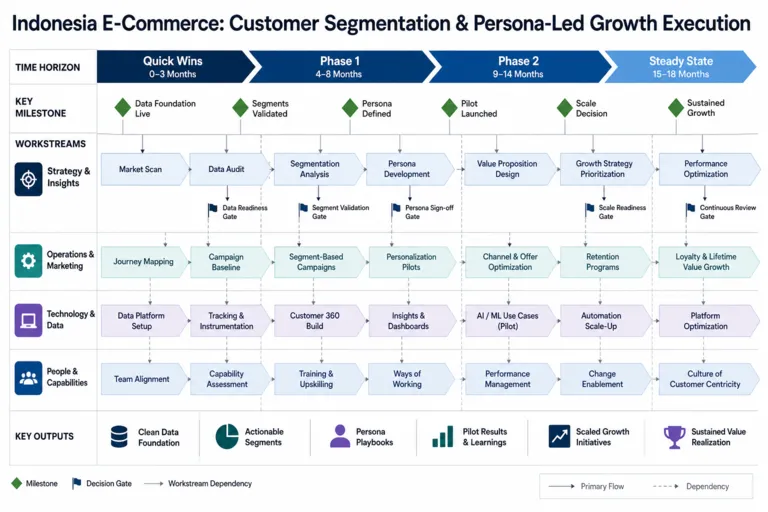
The project was executed in close cooperation with the client’s data analytics and marketing teams. Eurogroup Consulting first extracted and cleaned a large dataset of user transactions and site behavior (click streams, search queries) from the past 18 months. Using statistical tools and clustering algorithms, the team identified patterns and grouped customers into segments, which were then validated and enriched with demographic data where available. Meanwhile, the consulting team and the client devised survey questionnaires and recruited participants for focus groups, ensuring representation from the key segments discovered. Through the surveys and discussions, the consultants probed into questions like “What motivates you to try a new product online?” or “How do you decide between competing products or platforms?” The responses were analyzed for recurring themes and differences between segments. Eurogroup Consulting also benchmarked against industry reports on e-commerce trends in Indonesia, to contextualize the client’s specific findings within broader consumer shifts (such as mobile shopping growth or preference for certain payment methods). After synthesizing all the information, the team collaborated with the client to brainstorm strategy implications. They used persona profiles in workshops to challenge the client’s current product and marketing approaches, asking how each persona’s needs are being met or not. From these sessions, a set of strategic initiatives was formulated. The final deliverables included a comprehensive consumer insight report, several persona profiles with recommended engagement strategies, and an implementation roadmap for the client’s teams covering quick wins (like tweaking certain website features for better user experience) and longer-term actions (like new product category launches or loyalty program enhancements designed around customer behavior patterns).
Recommendations
Based on the consumer behavior insights, Eurogroup Consulting provided a range of recommendations. The client was advised to personalize the shopping experience on their platform: for instance, implementing a recommendation engine that surfaces products aligned with each segment’s interests, and customizing homepage banners or emails to reflect items likely to appeal to individual users. In terms of product strategy, it was recommended to expand or refine certain categories – for example, increasing inventory of trending fashion items popular with younger shoppers, while streamlining underperforming categories that research showed had low interest. Enhancing the quality and accessibility of product information was another recommendation, as many consumers expressed the need for trust signals; thus encouraging more customer reviews, adding Q&A sections, or offering comparison tools would aid purchase decisions. On the marketing front, Eurogroup Consulting suggested segment-specific campaigns: leveraging Instagram and TikTok influencers for segments driven by trends and visuals, versus promoting installment payment options and discounts for more price-sensitive segments. The client was also advised to improve its loyalty program by tailoring rewards to different customer motivations (such as exclusive early access to sales for high-spenders, or referral bonuses for social shoppers). Finally, establishing a continuous consumer insight mechanism was recommended – for example, regular surveys or a customer advisory panel – to keep a pulse on changing preferences so the company can iterate its offerings and strategies proactively.
Engagement ROI
The deep dive into consumer behavior yielded substantial returns for the e-commerce client. By implementing the recommendations, the company saw an immediate lift in customer engagement and sales metrics. Personalized product recommendations and segment-focused marketing drove a higher conversion rate, particularly among repeat customers who felt the platform understood their preferences – monthly active customers and average basket sizes grew as a result. The adjustment of the product mix to better match consumer demand led to faster inventory turnover and reduced instances of stockouts in popular categories, improving revenue. The emphasis on richer product information and reviews built greater customer trust; this was reflected in increased time spent on product pages and a decrease in product return rates, as buyers made more informed choices. Marketing campaigns that were tailored to specific audiences achieved higher click-through and conversion rates than previous one-size-fits-all approaches, maximizing the return on advertising spend. Furthermore, the new insights into customer personas helped the client identify a previously overlooked customer segment (for example, a suburban homemaker group interested in home appliances), opening a new avenue for targeted growth. Internally, the engagement instilled a more customer-centric mindset across teams, as decisions began to be more frequently backed by data on what consumers truly wanted. In summary, the consumer behavior analysis not only boosted short-term performance indicators but also equipped the company with a strategic understanding of its customer base, providing a competitive edge in Indonesia’s dynamic e-commerce market.