
The EU and Indonesia signed the Comprehensive Economic Partnership Agreement (CEPA) in September 2025 after nearly a decade of negotiations. It is designed to remove tariffs for most bilateral goods trade and set frameworks for services, investment, intellectual property, and digital trade. The timing matters for planning. Sources project ratification by 2027, with another source noting it may not happen until late 2026 or 2027. That creates a short runway for firms to map products, contracts, and compliance needs before preferences can be used at the border.
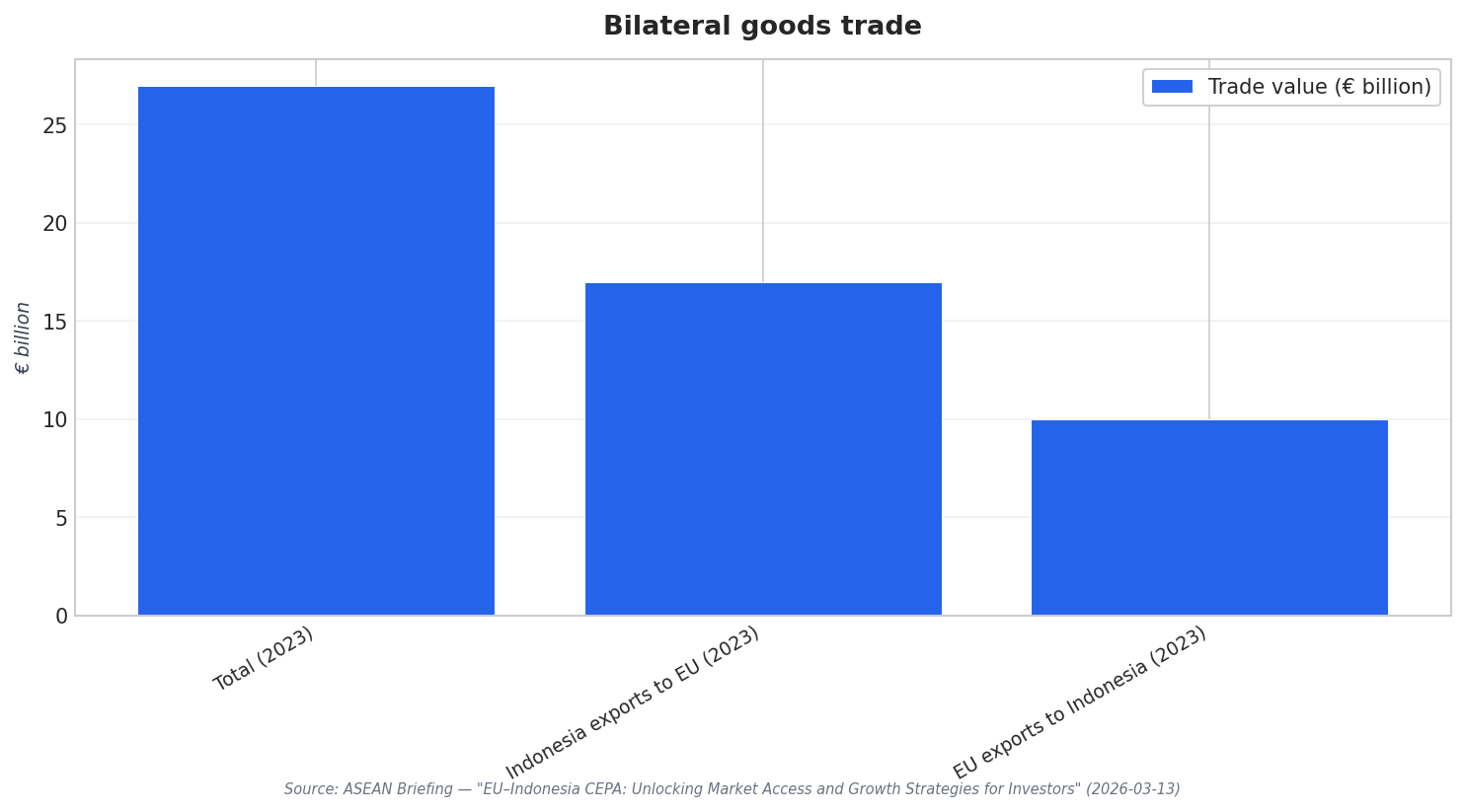
Companies also need to quantify what is at stake, but keep the scope clear. In 2023, trade in goods between the EU and Indonesia reached approximately €27 billion, with Indonesia exporting €17 billion to the EU and importing €10 billion. Another source estimates EU–Indonesia commerce at about US$30.1 billion in 2024. On tariffs, multiple sources converge on the core coverage: around 80 percent of Indonesian exports (by tariff lines) are expected to enter the EU tariff-free, either immediately or on phased schedules for sensitive goods, while European officials confirm tariffs will be lifted on roughly 98 percent of EU products entering Indonesia.
Compliance Steps Businesses Must Complete Before Preferences Apply
Tariff-free access is conditional, so operational work starts with origin and customs. CEPA’s preferential treatment depends on meeting rules of origin requirements, including supplier declarations, certification, and customs facilitation. Firms that manufacture in Indonesia for EU export should align sourcing, bill-of-materials traceability, and documentation well in advance, so goods qualify when the agreement takes effect. This is not a paperwork exercise only. One source stresses that rules of origin dictate the required depth of domestic value-added processes and can determine whether tariff preferences translate into real market access in practice.
Next comes sustainability, traceability, and due diligence. Access to the EU market is increasingly shaped by sustainability requirements, and one source highlights that palm oil and textiles show how sustainability requirements, smallholder supply chains, and limited value-added processing can blunt gains from tariff reductions. The EU classifies Indonesia as “standard risk” rather than “low risk,” which means higher compliance costs because exporters must undertake full due diligence, unlike “low risk” countries that can use simplified procedures. Another source flags the EU’s European Union Deforestation-Free Regulation (EUDR) and its due diligence requirements on commodities like palm oil as a practical constraint that can raise compliance costs for importers and exporters.
For many firms, Indonesia–EU CEPA implementation is also about readiness in services, investment, and governance, not only goods. CEPA liberalizes selected service sectors, including finance, logistics, and telecommunications, and includes provisions on digital trade that safeguard cross-border data flows and e-commerce. It also reinforces intellectual property rules covering patents, trademarks, and geographical indications. On investment, one source describes investor protections and dispute settlement, while another says the agreement strengthens investment security through the Investment Court System (ICS), replacing the Investor–State Dispute Settlement mechanism. To use these provisions, businesses should prepare licensing pathways, internal controls for responsible business conduct, and transparent compliance processes that can be evidenced during audits, customs checks, or partner due diligence.
When was the EU–Indonesia CEPA signed, and when could it be ratified?
How much tariff coverage does the CEPA provide on each side?
What must a business do to qualify for tariff preferences under the agreement?
Why can EU sustainability and due diligence rules affect market access even with tariff cuts?
What does Indonesia–EU CEPA implementation mean for services and digital trade planning?