Indonesia’s LPG story is defined by household reliance and fiscal exposure. According to BPS, 89.7% of Indonesian households used LPG as their primary cooking fuel in 2025. That reliance intersects with a subsidy structure that is expensive at scale: IEEFA notes that each subsidized 3-kilogram LPG cylinder sold costs the government IDR30,000 in subsidies. IEEFA also reports that in 2025, subsidized 3kg cylinders accounted for 92% of the country’s LPG consumption by volume, resulting in subsidies totaling IDR87 trillion. Together, these figures frame why supply security and cost control are central to the debate around fuel choices and downstream investment.
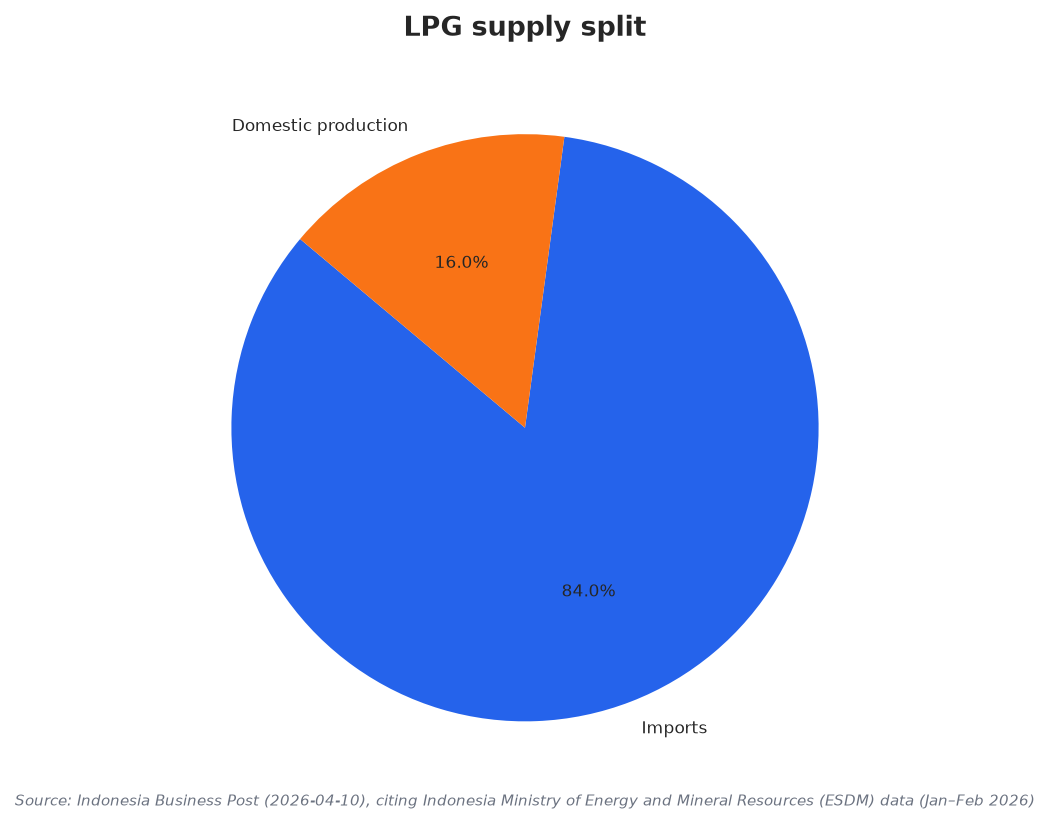
Import exposure remains a core issue in Indonesia’s LPG market. Ministry of Energy and Mineral Resources (ESDM) data cited by Indonesia Business Post shows that between January and February 2026, LPG imports reached 1.31 million metric tons, accounting for 83.97% of total demand of 1.56 million metric tons, while domestic production was around 130,000 metric tons. The same report describes how this dependence creates external vulnerabilities, including geopolitical risk around chokepoints such as the Strait of Hormuz. It also notes that the United States accounted for 68.91% of total imports as of April 1, 2026, with additional volumes from the Middle East and other regions.
Why More LPG Plants Help, but Don’t Fix the Structural Gap
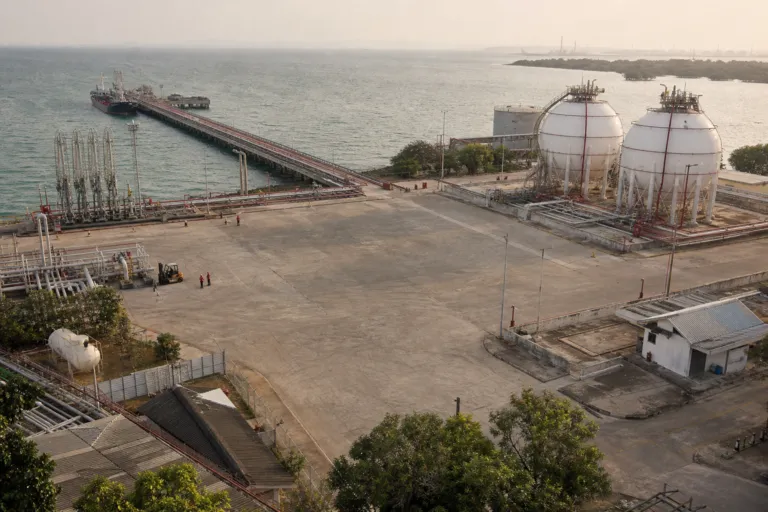
New domestic LPG facilities can still look compelling, but the near-term impact may be limited compared with demand. SKK Migas said two plants scheduled for inauguration would add around 193 metric tons per day to national output, with the Cilamaya LPG Plant producing 163 metric tons per day and the Tuban LPG Plant adding around 30 metric tons per day. However, Indonesia Business Post reports that this increase represents less than 1% of Indonesia’s daily LPG demand of around 26,000 metric tons. The same source also states demand rose from around 25,000 metric tons per day in 2025 to approximately 26,000 metric tons per day as of February 2026.
For investors evaluating domestic gas downstreaming, the policy intent is clear, but the economics are not simple. IEEFA explains that the government has considered replacing the 3kg LPG cylinder with a similar-sized compressed natural gas (CNG) cylinder sourced from domestic gas fields, or producing coal-based dimethyl ether (DME). Yet IEEFA cautions that both options require significant infrastructure investment and construction times, and could ultimately produce fuels that are more expensive than LPG on a delivered-cost basis. IEEFA also highlights that domestically produced gas under the HGBT regime is not always available where demand centers are located, meaning some CNG bottlers must rely on regasified LNG at prevailing spot prices plus regasification and import duties.
This is the crux of the Indonesia LPG import dependency debate: substitution is not automatically cheaper or easier than strengthening downstream capability. IEEFA notes that domestic LPG feedstock, city gas, and transport CNG—categories closest to household cooking—together account for less than 2% of total gas utilization, and it argues there is unlikely to be any surplus gas supply available to support a national cooking program without displacing existing users or increasing LNG imports. On DME, IEEFA says its analysis in 2020 and 2025 reached the same conclusion: DME production is not cost-effective and would require ongoing subsidy support.
How import-reliant is Indonesia’s LPG supply based on 2026 data?
What does the government spend on the 3kg LPG subsidy system?
Will new LPG plants materially reduce Indonesia’s LPG import dependency in the near term?
Are CNG or DME straightforward substitutes for subsidized LPG cylinders?