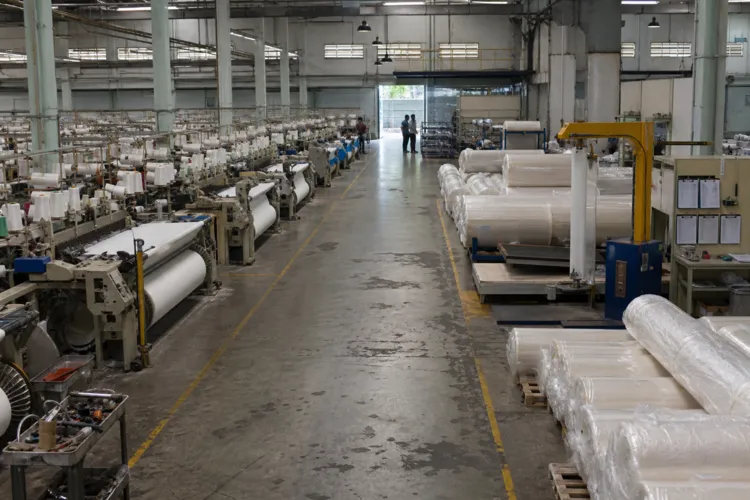
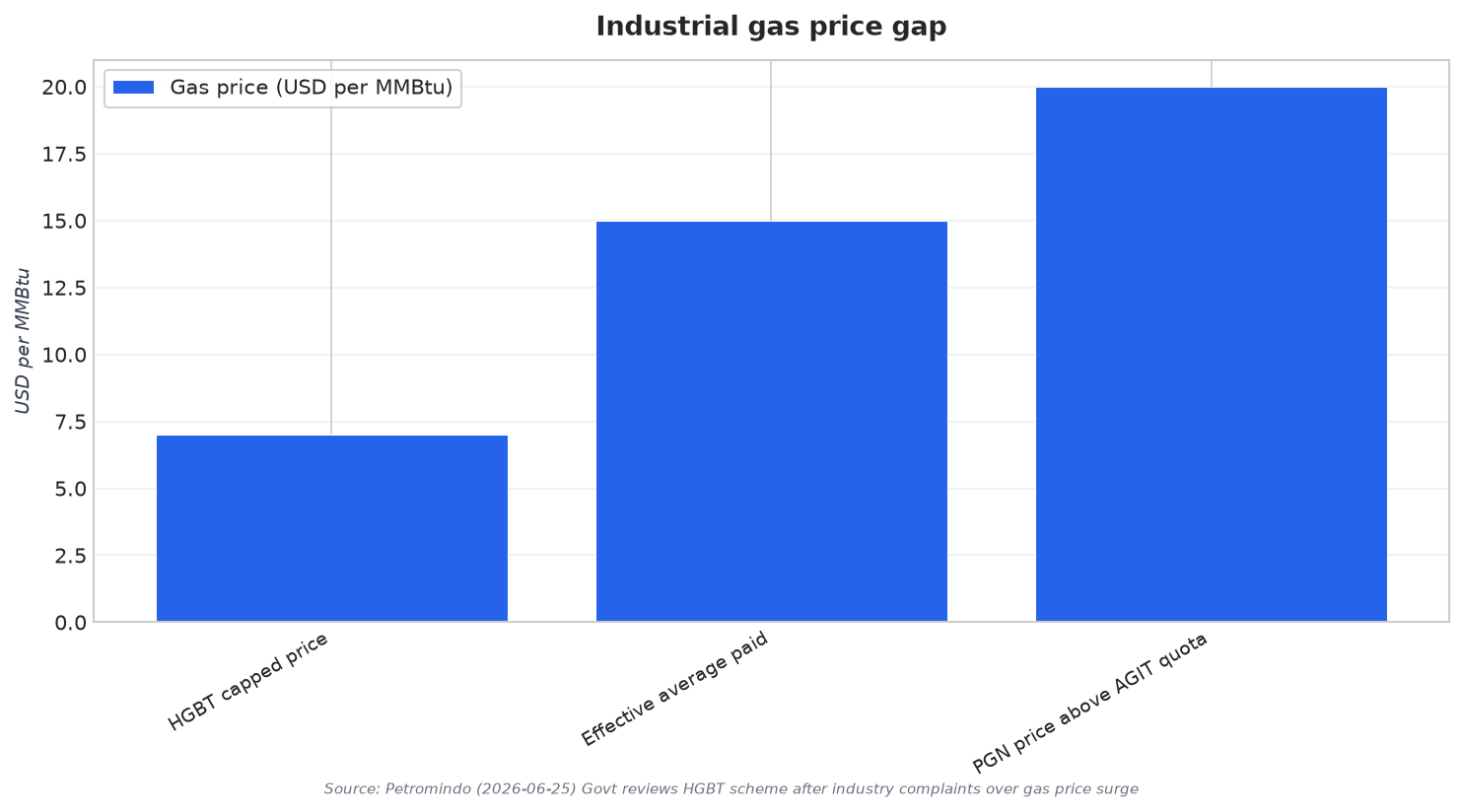
Indonesia’s push for “cheap gas” is a competitiveness policy as much as an energy policy. Under the Certain Natural Gas Price (Harga Gas Bumi Tertentu, HGBT), the government capped gas prices for seven strategic, gas-intensive industries at about USD 6 per MMBtu, while other references put the regulated band at USD 6.50–7.00/MMBtu. The stated aim is to keep factories operating and protect jobs, especially as manufacturers cite high energy costs as a pressure point. But the system increasingly hinges on how much subsidized gas is actually delivered, not only on the ceiling price written into regulations.
The main winners are industrial users that can secure their HGBT volumes, because the alternative is far more expensive. Petromindo reported that industrial users were effectively paying an average of around USD 15 per MMBtu—more than double a USD 7 per MMBtu HGBT reference—because allocations were tight. The same report cited an Industrial Gas Allocation (AGIT) level of 27.5% and noted PGN’s plan to apply USD 20 per MMBtu for consumption exceeding AGIT starting from June 2026 usage. In other words, the policy can produce two prices inside one factory: a subsidized slice and a market-priced slice.
Why Quotas and LNG Logistics Changed the Real Price
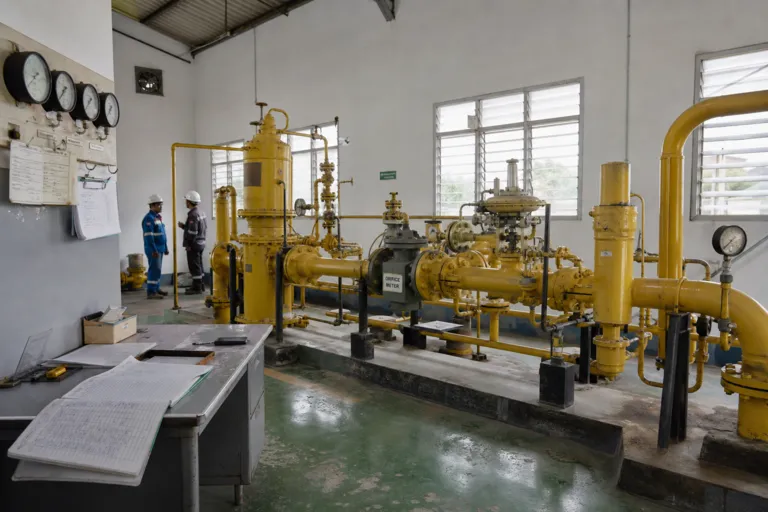
The HGBT price cap collided with supply geography. Indonesia Investments described mature fields in Western Java—near the country’s manufacturing base—running dry, shrinking access to cheap pipeline gas. As a result, strict quotas emerged; in some regions, the subsidized portion covered less than 30% of what factories needed. Distributors then turned to LNG shipped from Papua, Sulawesi, and Kalimantan, bought at market rates, which pushed average effective prices toward USD 20 per MMBtu in the same account. LNG is also capital-intensive to move: it must be chilled to −162°C to become liquid, shrinking its volume 600 times before shipping and later regasification. Those steps add costs that a fixed ceiling price cannot erase.
So who else gains, and who pays? The government has signaled it will reduce part of its upstream state revenue to keep gas affordable for industry, but it is also asking others to share the burden. Indonesia Investments reported that Cooperation Contract Contractors (KKKS) were requested to adjust margins and that state-controlled distributor PGN was pushed to improve downstream efficiency so the state budget (APBN) does not carry the impact alone. A 2026 academic assessment framed this as a layered regulatory stack: a Domestic Market Obligation (DMO) that requires producers to reserve about 25% of output for the domestic market, the HGBT ceiling for priority sectors, and AGIT as the physical delivery mechanism. The same assessment noted LNG/regasification capacity has shifted further in favor of LNG-based monetization versus dedicated pipeline capacity for HGBT demand, which can run counter to the policy’s intent.
What changes next will likely revolve around allocation, eligible sectors, and the size of the implicit subsidy. MEMR has been reviewing the domestic gas price policy after complaints tied to declining domestic production and greater reliance on more expensive LNG supplies. At the same time, sectoral expansion remains on the table: in November 2025, the Ministry of Industry proposed extending the USD 6–7 per MMBtu HGBT price to the aluminium industry, arguing it would cut energy costs in alumina refining and smelting and support downstreaming; stakeholders also discussed redirecting under-utilized quotas. But Indonesia’s limited gas supply creates trade-offs. IEEFA noted industry is the largest domestic gas consumer at 30.83% of utilization, or 1,809.1 BBtuD, and warned that extending similarly regulated pricing broadly—such as to households—would place cooking in direct competition with existing industrial demand. The next iteration of the policy may therefore focus less on expanding cheap gas everywhere and more on enforcing delivery rules, targeting recipients, and managing LNG-driven cost realities.
What does the HGBT policy cap industrial gas prices at in Indonesia?
Why are some factories paying far above the HGBT ceiling?
How does the Domestic Market Obligation (DMO) fit into industrial gas pricing?
Who is Indonesia considering adding to HGBT eligibility?
What is changing in Indonesia’s industrial gas price policy debate?