Indonesia is a high-potential destination for expansion. It is described as Southeast Asia’s largest economy and the world’s fourth most populous nation, with over 280 million people. As of 2023, its GDP stood at approximately $1.29 trillion, and GDP growth averaged around 5% annually over the past decade. Those fundamentals can make an entry look straightforward on paper, but execution depends on the structure you choose. A sound Indonesia market entry strategy should start with the operating reality: legal procedures, administrative approvals, and policy requirements need to be understood before you invest, sell, and hire in-country.
If speed-to-market and lower setup complexity are priorities, a local distributor (or agent) model is often the first filter. Indonesia’s geography spans more than 17,000 islands, and distribution is complicated by underdeveloped logistics infrastructure and traffic congestion. The U.S. International Trade Administration notes that many foreign firms choose local distributors because they bring market knowledge, infrastructure, and regulatory familiarity. Under Ministry of Trade Regulation No. 24 of 2021, foreign companies that wish to sell products in Indonesia are required to appoint a local agent or distributor, and the appointment must be formalized through a notarized agreement. The distributor or agent must obtain an STP (Surat Tanda Pendaftaran) from the Ministry of Trade, and if the principal is offshore, the agreement must be certified by an Indonesian trade attaché or official in the country of origin.
Joint Venture vs Wholly Foreign-Owned (PT PMA): Control, Alignment, and Compliance
A joint venture can make sense when you need local manufacturing links, local content supply chain partners, or deeper commercial coverage beyond a single distributor footprint. However, sources stress the need to evaluate governance structures, ownership arrangements, and long-term strategic alignment before committing to a joint venture. A joint venture can also be a practical response to sector rules, because Indonesia’s foreign investment framework is governed by the Investment Law and includes industry restrictions and foreign ownership limits in some sectors. In parallel, GreyRadius highlights a go-to-market approach that can involve national distributors, regional distributors, e-commerce partners, and joint venture partners, with a “Java as first market, Sumatra as second market” planning logic for go-to-market sequencing.
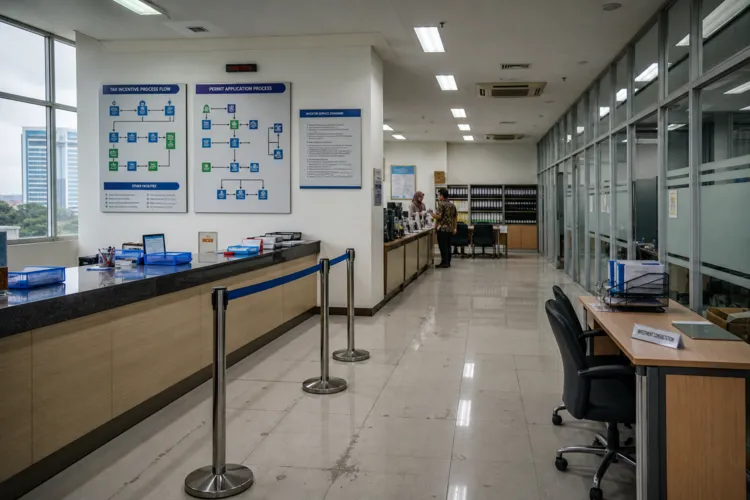
If your objective is maximum control over operations, a wholly foreign-owned setup is typically discussed through a Foreign Investment Company, known as a PT PMA. Under the Investment Law, foreign investors can establish a PT PMA, but certain investment ratios and industry restrictions must be adhered to. The sources also note that foreign companies can invest freely in most industries, but some sectors have foreign ownership limits, with stricter regulation flagged for areas such as defense, media, education, and healthcare. One cited requirement is that this structure requires a minimum foreign ownership percentage, typically 49%, although certain industries may have higher requirements. Before beginning operations, foreign companies must apply to and obtain approval from the Investment Coordinating Board (BKPM), which helps ensure compliance with investment and business regulations.
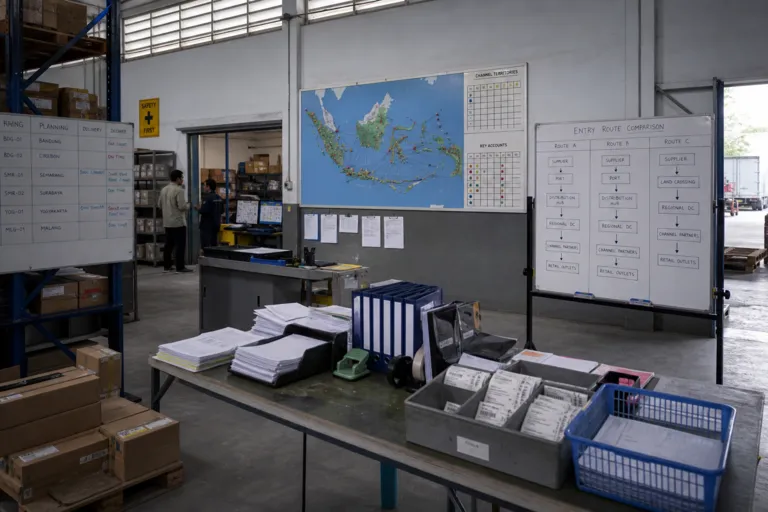
Whichever route you choose, documentation and operational readiness can decide outcomes. Contracts matter: since 2009, contracts with Indonesian parties must be in Bahasa Indonesia, and courts can reject English-only contracts, so bilingual agreements are recommended in practice guidance. On the channel side, an agent differs from a distributor: an agent markets goods without taking ownership, while a distributor purchases, stores, and sells on its own behalf. Distribution execution can also hinge on warehousing realities, because many Indonesian companies are reluctant to assume carrying costs of warehousing; some foreign firms respond by using offshore warehousing in regional hubs such as Singapore for delivery reliability. In short, the “best” entry mode is the one that matches your compliance path, channel requirements, and the operational constraints of serving customers across Indonesia’s islands.
How do I choose an Indonesia market entry strategy between a joint venture, distributor, or PT PMA?
Are foreign companies required to appoint a local distributor or agent to sell in Indonesia?
What is the difference between an agent and a distributor in Indonesia?
What approvals are mentioned for establishing a wholly foreign-owned company in Indonesia?
What contract language issue can affect market entry execution in Indonesia?