As global tariff walls shift, Indonesia is trying to avoid being boxed into a narrow set of buyers and products. The country’s export profile still leans heavily on natural resources, and several sources stress the vulnerability that comes with commodity price swings. That is why policy and industry discussions increasingly center on moving toward more value-added exports and strengthening long-term sustainability. At the same time, Indonesia remains a major player in textiles and garments, with an integrated chain from raw fibre to finished apparel and an estimated workforce exceeding 3.5 million. That scale is an advantage, but it also raises the stakes when access conditions change in key markets.
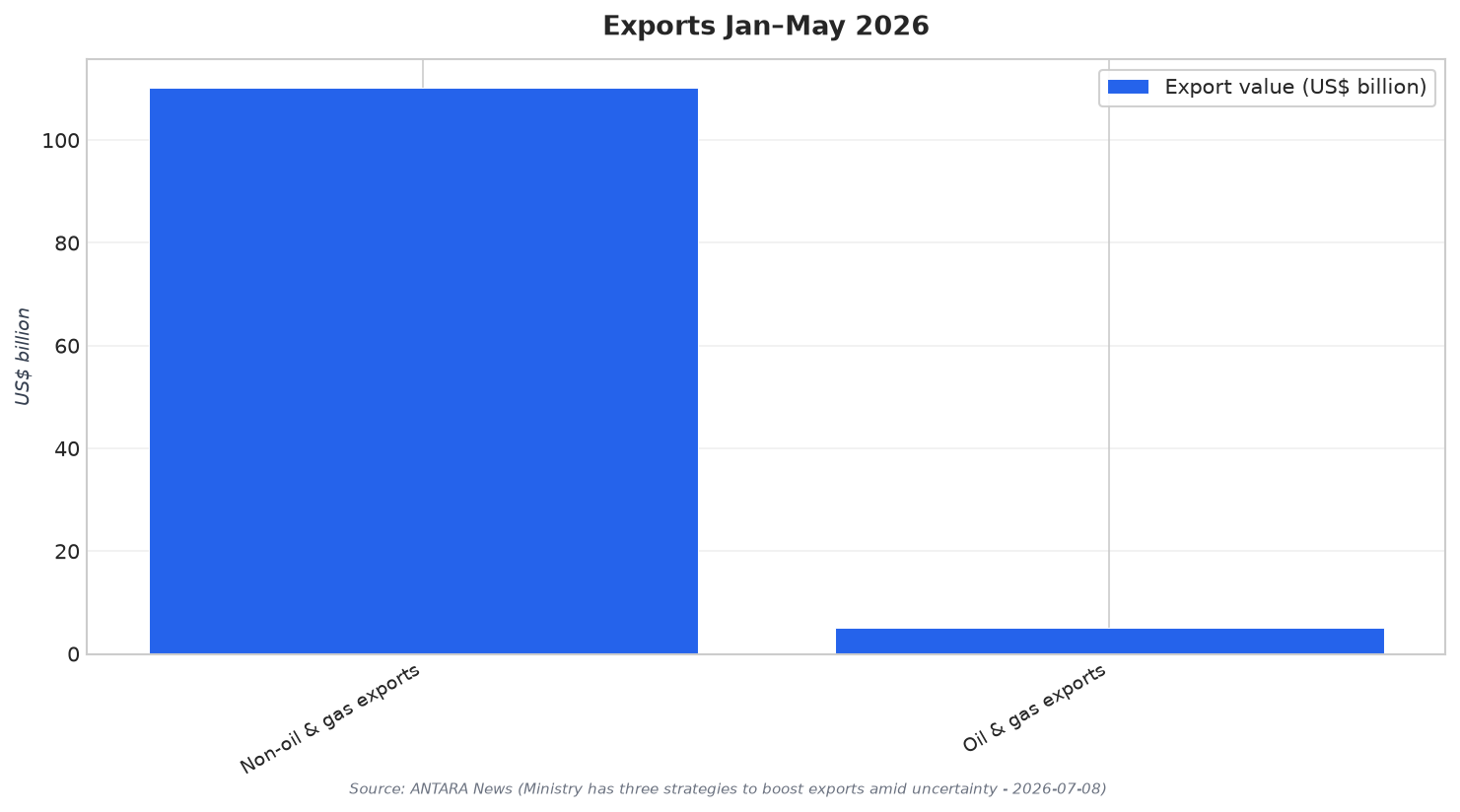
Recent trade data shows why resilience is a priority. According to Indonesia’s Ministry data reported by ANTARA News, exports reached US$23.20 billion in May 2026, down 8.30 percent from April 2026 and 5.73 percent from May 2025. The month’s decline was driven by a 34.38 percent drop in oil and gas exports and a 7.05 percent decline in non-oil and gas exports. Over January–May 2026, cumulative exports reached US$115.36 billion, up 3.02 percent year-on-year, led by non-oil and gas exports rising 3.89 percent to US$110.19 billion, while oil and gas exports fell 12.71 percent to US$5.17 billion. This mix highlights both momentum and exposure across categories.
Market Access Becomes the New Battleground
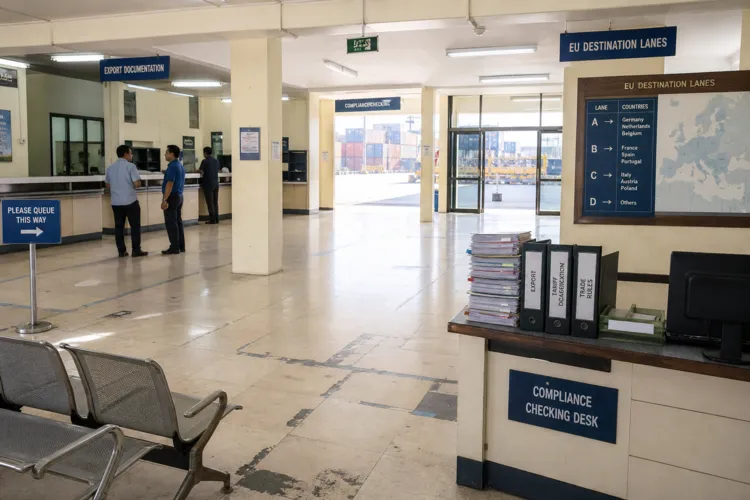
Concentration risk is also geographic. In garments, the United States is, by some estimates, the single largest destination and accounts for more than half of Indonesian garment exports. That dependency can turn policy shifts into immediate commercial shocks, especially when tariffs or restrictions tighten. In response, Coordinating Minister for Economic Affairs Airlangga Hartarto has emphasized expanding export markets as a primary response to slowing exports and dynamic global economic shifts. One focal point is the European Union, where Indonesia has been in discussions to expedite ratification of a trade agreement. Hartarto said the process is in technical completion, including translating essential documents into 22 European languages, with the aim of improving competitiveness and potentially enabling zero-tariff entry for Indonesian products if the agreement proceeds as anticipated.
Trade policy mechanics matter because tariffs can act as either a barrier or a gateway. Indonesia uses the Harmonized System (HS) to classify goods, and tariff rates vary by sector. Viettonkin Consulting notes that trade agreements are key, pointing to regional and bilateral frameworks such as the ASEAN Free Trade Area (AFTA) and RCEP, which can reduce tariffs and trade barriers for members. It also highlights that some goods competing with local industries, including textiles and automotive, can face higher import duties, though exceptions may apply. For businesses navigating these rules, the Indonesia National Single Window (INSW) is referenced as a tool to check specific tariff rates and regulations, supporting better planning when targeting new markets.
Indonesia’s official push is not only about markets, but also about products and exporter capability. ANTARA reports the ministry has three strategies to boost exports amid uncertainty, including diversifying export markets and products so performance does not depend heavily on specific markets or commodities. Another strategy focuses on strengthening exporter competitiveness, especially for micro, small, and medium enterprises (MSMEs), via export assistance, business matching, and trade promotion. This connects with the wider argument for Indonesia export diversification: reducing vulnerability to commodity price volatility by building more value-added offerings, while using trade pacts and promotion tools to turn supply-chain diversification by global manufacturers into real commercial pathways for Indonesian exporters.
What do the latest figures say about Indonesia’s export momentum in 2026?
Why is heavy reliance on one garment market a tariff risk?
How is Indonesia approaching the European Union to improve market access?
What are the government’s strategies to reduce dependence on commodities and specific markets?
What does Indonesia export diversification mean in practice under shifting tariff walls?