
Indonesia’s sovereign story in 2026 has been defined by a gap between ratings actions and market anxiety. By mid-July, S&P Global Ratings affirmed Indonesia at BBB/A-2 and kept a Stable outlook, describing recent fiscal and external strains as temporary and pointing to revenue recovery and relatively low government debt. Yet earlier in 2026, Moody’s (February) and Fitch (March) moved their outlooks for Indonesia to Negative while keeping the rating level at Baa2/BBB. That difference matters. An outlook shift is a warning signal rather than a downgrade, but it can still shape how global investors price risk and how quickly they demand proof of policy predictability.
Several pressure points have fed this debate. The rupiah was described as trading at more than 18,000 to the U.S. dollar in July reporting, and a separate analysis noted it had broken past 18,000. Equity sentiment has also been volatile: one source described the stock market as having fallen about 40% from its peak at one point, while another said the benchmark stock index plunged 30% year-to-date, and the analysis mentioned the Jakarta Composite Index (JCI) rose about 1.9% the next session after S&P’s July 13 affirmation. Credit-market stress showed up too, with dollar-hedged rupiah bond losses reported at 10%.
What Ratings Agencies Are Watching—and Why It’s Not Just Macroeconomics
The agencies’ messages converge on credibility and policy clarity. Reporting on Fitch’s outlook cut cited “increasing policy uncertainty” and an “erosion” of policy consistency and credibility, alongside “growing centralization of policymaking authority.” S&P, by contrast, said a “track record of fiscal discipline across multiple administrations supports Indonesia’s creditworthiness” and argued fiscal pressures are temporary, expecting revenue to continue recovering this year and export receipts to rebound with higher commodity prices. The Diplomat also pointed to strains S&P associated with high energy prices, higher interest rates, a weak currency, increased policy uncertainties, and accumulated debt.
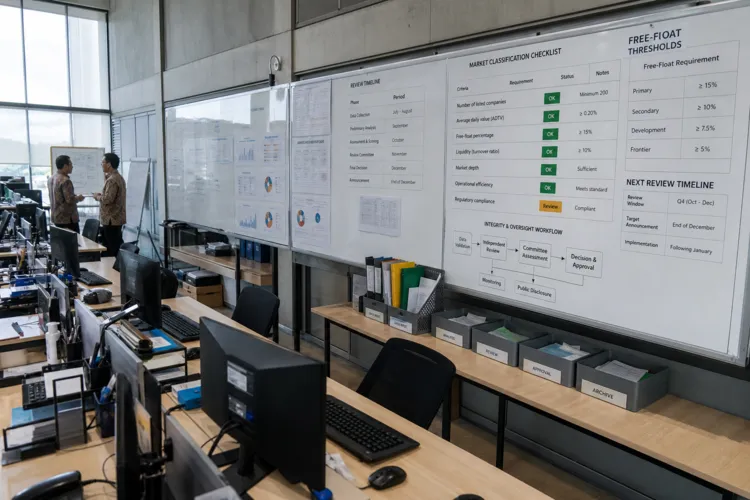
For corporates, the Indonesia sovereign credit rating outlook is not an abstract label. It can influence how international lenders, bond investors, and even equity allocators frame Indonesia risk, especially when policy predictability is questioned. Investors also watch market-structure signals: MSCI threatened in January to downgrade Indonesia to “frontier market” status over transparency concerns, including concentrated ownership and limited free float. In response, the government proposed reforms including doubling the minimum free float for listed companies to 15%, and MSCI extended its review until November. These steps matter to corporates because index status and liquidity perceptions can affect foreign participation and funding windows.
Companies should focus on practical implications rather than rumors of an immediate drop to “junk.” One analysis emphasized that no agency downgraded the rating itself in 2026; the rating at BBB was affirmed by all three agencies, most recently by S&P on July 13 with a Stable outlook, even as two agencies set Negative outlooks earlier. That distinction can still move pricing and terms, especially if investors demand clearer fiscal consolidation and sustained capital inflows, as market commentary warned. Corporates can respond by stress-testing FX and funding assumptions, communicating exposure transparently, and tracking policy signals tied to revenue measures, export earnings, and the 3% annual deficit ceiling that has been described as an anchor of confidence.
Did Indonesia’s sovereign rating get downgraded in 2026?
What did S&P say when it affirmed Indonesia at BBB/A-2?
What are the main red flags agencies highlighted around policy?
How can the Indonesia sovereign credit rating outlook affect corporates?
What stock-market reform was proposed after MSCI raised concerns?