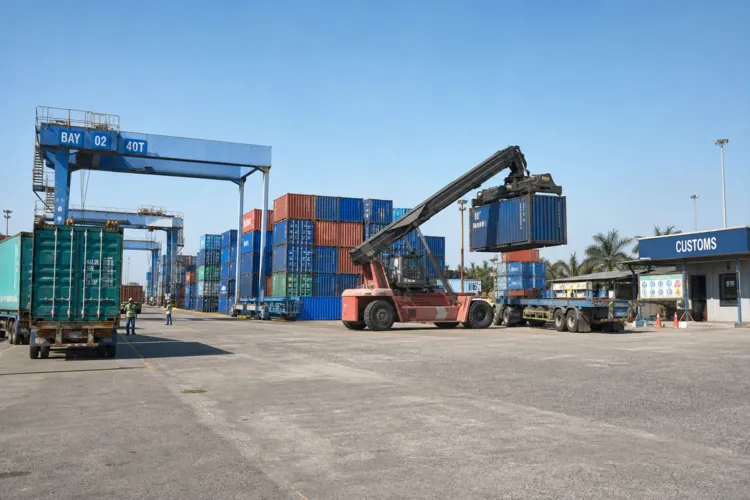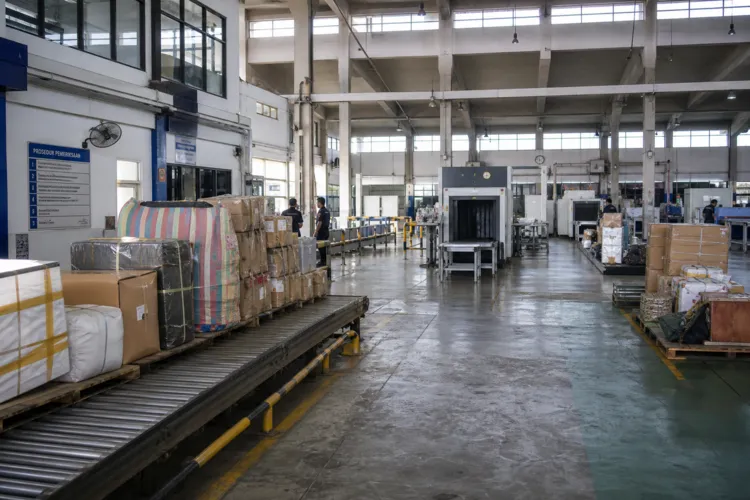
New entrants often underestimate how much distribution determines outcomes in Indonesia. The operating environment starts with physical constraints: Indonesia’s complex geography spans more than 17,000 islands, and underdeveloped logistics infrastructure and urban congestion create practical challenges for moving goods. At the same time, there is a full spectrum of agents, distributors, wholesalers, and retailers. Many foreign firms still choose local distributors because they bring market knowledge, infrastructure, and regulatory familiarity. Your channel plan should therefore begin with a reality check on reach, lead times, and who will carry which operational burdens, instead of treating “distribution” as a simple sales handoff.
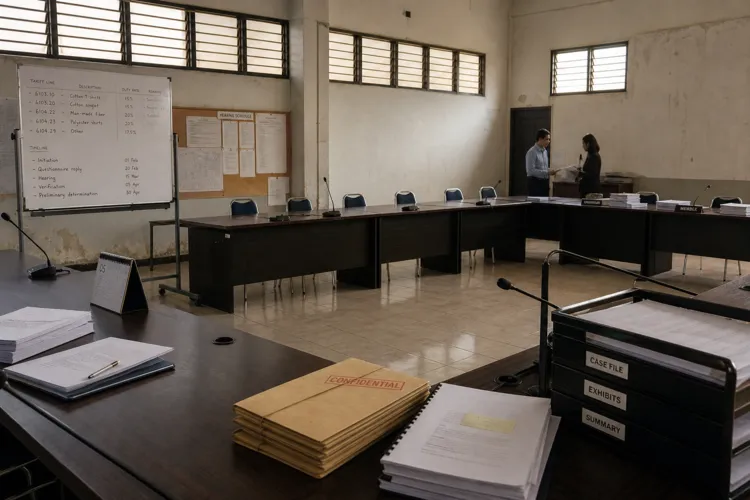
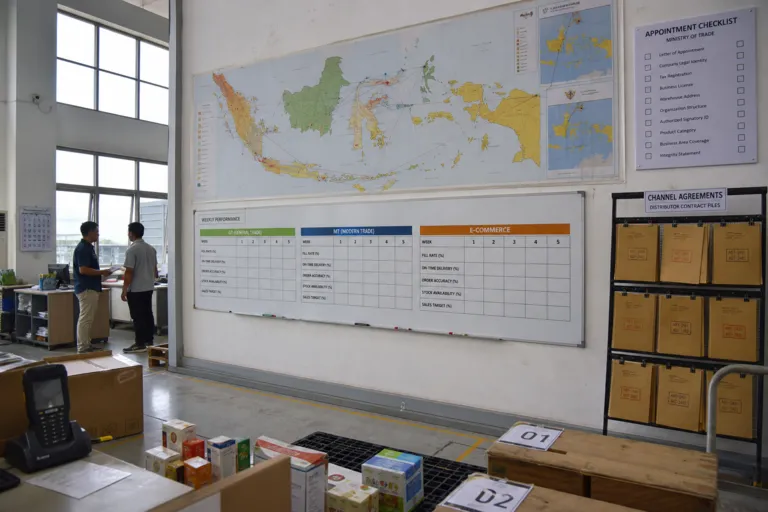
Compliance is not optional. Foreign companies that want to sell in Indonesia are required to appoint a local agent or distributor under Ministry of Trade (MOT) Regulation No. 24 of 2021 on Agreements for Distribution of Goods by Distributors or Agents, which replaced MOT Regulation No. 11/M-DAG/PER/3/2006. The appointment must be formalized through a notarized agreement. If the principal is offshore, the agreement must also be certified by an Indonesian trade attaché or official in the goods’ country of origin at the representative office. The appointed local distributor or agent must obtain an STP (Surat Tanda Pendaftaran) from the MOT as proof of registration.
A Practical Framework to Select the Right Partner and Channel Mix
Start by deciding whether you need an agent or a distributor, then stress-test channel economics. An agent markets on behalf of the principal without taking ownership, typically earning commission or fees. A distributor purchases, stores, and sells on its own behalf, taking ownership and responsibility for sale and distribution. In fragmented retail environments, channel economics can make or break a rollout. One Asia-focused framework models channel choices as revenue per channel multiplied by margin per channel multiplied by scalability of channel, and warns that stacked margin requirements can destroy value if not modeled before signing. For FMCG, research on Indonesia highlights the long-run advantage of integrating modern trade (MT), general trade (GT), and e-commerce under a unified platform for multichannel reach, in a country whose FMCG market is supported by a population of over 284 million (Badan Pusat Statistik, 2025).
Then design the operating model around Indonesia’s logistics realities and retailer expectations. Trade.gov notes that securing a stocking distributor can be difficult because many companies are reluctant to assume warehousing carrying costs. Corruption can complicate logistics, and severe traffic congestion and underdeveloped infrastructure can increase the cost of transporting goods over long distances from a central domestic warehouse. As a result, some foreign companies use offshore warehousing in regional hubs such as Singapore to support timely delivery. On the demand side, Indonesia’s retail operations are being restructured by technology and evolving expectations, where omnichannel is described as a baseline for competition. Technavio notes that real-time inventory management that unifies inventory across channels can reduce stockouts by over 15%, reinforcing why you should assess whether a distributor can support cross-channel inventory visibility and execution.
Finally, manage distributors with explicit governance, data discipline, and a pathway to scale. Put the notarized distribution agreement and STP status at the center of onboarding, then add performance routines that match the omnichannel reality: shared inventory rules, escalation paths, and consistent metrics across GT, MT, and e-commerce. If your category is regulated or globally specified, clarify the distributor’s role early. For example, in Indonesia’s subcutaneous drug delivery devices context, procurement decisions are often made centrally at global or regional headquarters based on partnerships formed 5–10 years before Indonesian market launch, while local Indonesian entities execute import, registration, and in-country distribution with minimal influence over core device selection. That pattern matters: it suggests new entrants should separate “product/platform selection” governance from “in-country execution” governance to avoid misaligned expectations and underperformance.
What is a practical Indonesia distributor selection strategy for new entrants?
What legal steps are required to appoint an agent or distributor in Indonesia?
Why can it be hard to find a stocking distributor in Indonesia?
How should entrants think about warehousing and delivery options?
What operational capability matters for omnichannel distribution performance?