
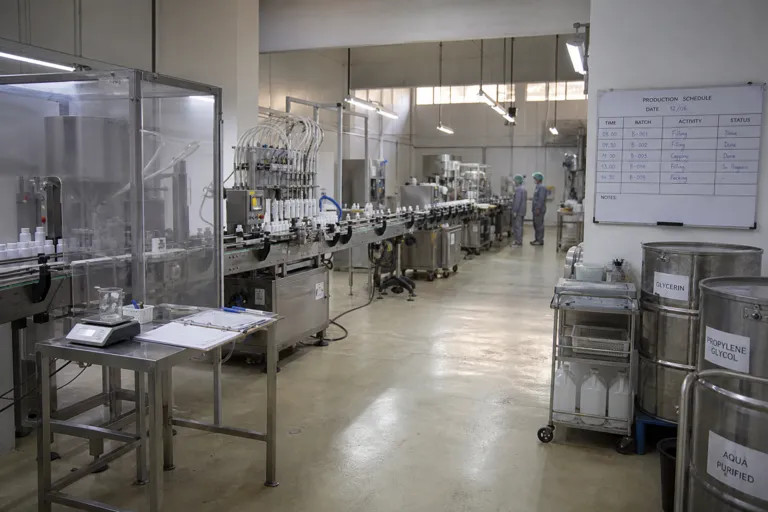
In the Indonesia cosmetics market, competitive advantage is shifting from who has the biggest global name to who can execute the fastest. The market operates through multinational subsidiaries, domestic manufacturers, contract producers, distributors, specialty retailers, pharmacies, and digital marketplaces. Demand is supported by a large consumer base, including more than 141.8 million women in 2025, and brands are using product innovation and affordable pack sizes to increase purchase frequency. Manufacturing and brand activity is concentrated in Greater Jakarta, West Java, and East Java, where contract manufacturing, packaging, logistics, and modern retail ecosystems are deepest.
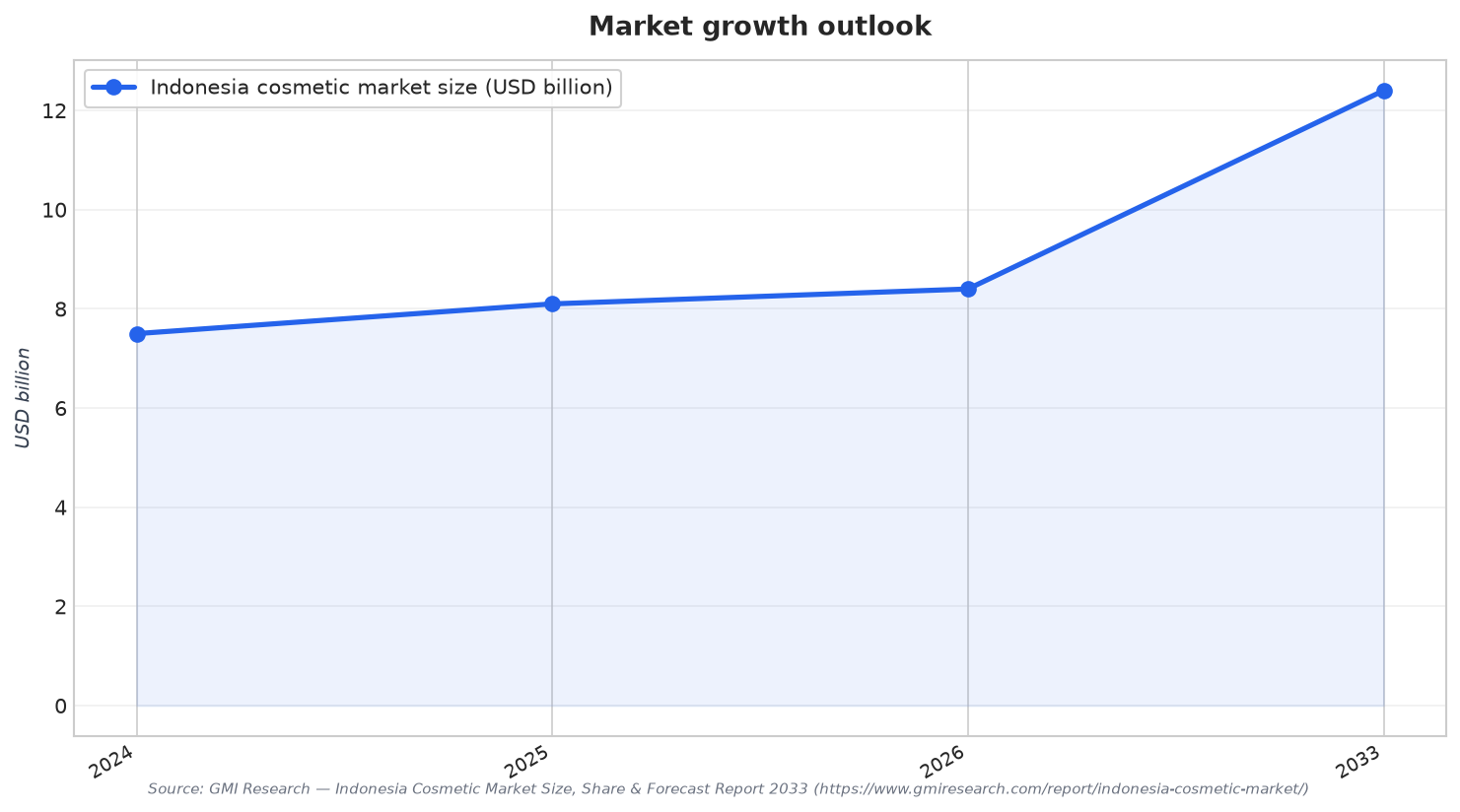
Market sizing varies by report, but both point to continued expansion. One forecast values Indonesia’s beauty and personal care market at USD 9,740 million in 2025, projecting USD 12,575 million by 2031 at a 4.35% CAGR, and describes a longer outlook to USD 13,122 million by 2032. Another estimates the Indonesia cosmetic market at USD 8.1 billion in 2025 and projects USD 12.4 billion by 2033 at about a 5.6% CAGR, with figures of USD 7.5 billion (2024) and USD 8.4 billion (2026). Across both views, skin care leads on revenue, and online sales are expected to grow faster than offline channels.
Why Local Players Are Beating Multinationals on Price and Speed
Local brands are benefiting from a fragmented production base that makes launching easier than building from scratch. BPOM recorded 1,292 cosmetics industries by December 2024, while another industry view describes 1,500+ manufacturers and notes that more than 90% of businesses are SMEs. That structure supports contract production and rapid local-brand formation. It also intensifies competition for shelf visibility, creators, and marketplace traffic, pushing brands to win with distribution execution and faster iteration. Consumer data reinforces the price thesis: 38% of consumers switched to local brands citing a “better price-to-quality ratio,” and marketplaces keep shoppers highly comparison-driven, with 53% reading Shopee reviews before purchasing.
Digital discovery and conversion mechanics also reward speed. Shopee is cited as the leading e-commerce platform for beauty with over 45% market share, while 58% of consumers discover new beauty brands via TikTok Shop. TikTok Shop beauty sales in Indonesia grew 250% year-on-year in 2023, and mobile apps account for 85% of online beauty transactions. Even live formats can matter operationally, with live streaming mall sessions generating up to 20% of a brand’s daily online revenue. These patterns fit a market where scale increasingly depends on distribution execution and rapid feedback loops, not just production access.
Regulation and trust signals further shape who can move fast without stalling. Consumer checks are becoming habitual, with 70% of respondents stating they check the BPOM registration number before buying. On top of registration intensity, more than 50,275 new cosmetic registrations were added through October 2025, adding workload for compliance teams while brands try to maintain launch speed. Halal positioning is both a demand cue and a planning constraint: 72% of Indonesian beauty consumers prefer brands offering Halal-certified products, and the 17 October 2026 halal deadline requires portfolio-by-portfolio certification planning. Brands that operationalize BPOM-compliant development and halal readiness can sustain faster release cycles while multinationals may lean on research, premium branding, and retail execution.
How big is the Indonesia cosmetics market, according to recent reports?
What evidence shows local beauty brands are winning on value in Indonesia?
Which online channels are shaping faster brand growth in Indonesia?
Why does BPOM registration affect speed to market?
How does halal certification influence competition between local and multinational brands?