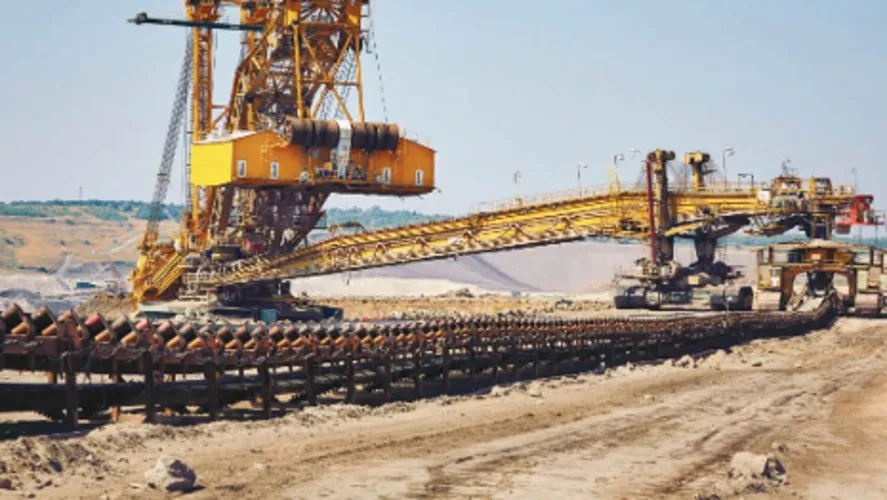

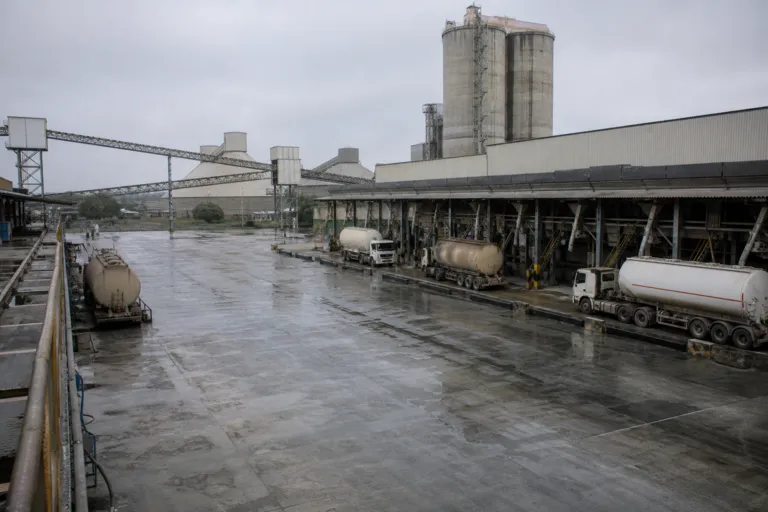
Indonesia’s cement market is the largest in Southeast Asia by volume, but the core issue shaping competition is oversupply. Multiple sources describe a structural imbalance where installed production capacity sits between 115 and 119 million metric tons per year, while total annual domestic demand ranges from 65 to 68 million tons. That gap is reflected in low utilization, cited at around 55–60% industry-wide, while another market view places utilization at 65–75%. National cement use was also described as 54% in 2025. In practical terms, this keeps domestic prices under pressure, limits pricing power, and compresses margins, especially for producers with older, less efficient kilns or weaker geographic positions.
Demand is not absent; it is uneven and sensitive to policy and cycles. Residential and housing-related consumption accounts for roughly 60–70% of cement demand, while infrastructure and government-linked projects contribute an estimated 20–30%. In H1 2026, consumption surged toward the end of the half, peaking in June 2026 at 5.5 million tons, up 13.1% year on year. The same period showed bulk cement jumping 19.9% (y/y) and bagged cement rising 10.4% (y/y). Government-backed initiatives cited as demand drivers included SPPG units under the Free Nutritious Meals program, KDMP, the People’s School program, post-disaster reconstruction in Sumatra, and initial rollouts under a three million houses program.
Why Consolidation Pressure Is Rising Across the Value Chain
Indonesia cement oversupply changes what “winning” looks like. Several sources converge on the idea that the market no longer rewards capacity expansion, and competition is shifting toward efficiency, reliability, and carbon performance. National cement sales fell about 1.5% year on year to 63.85 million tons in 2025, with growth concentrated mainly in eastern Indonesia while demand in Java and other major markets cooled. Logistics also matters because delivered costs vary across an archipelago of more than 17,000 islands; regional price disparities can exceed 20–30% between Java and remote islands. These dynamics favor players that can rationalize capacity, optimize logistics, and defend margins through scale and network reach.
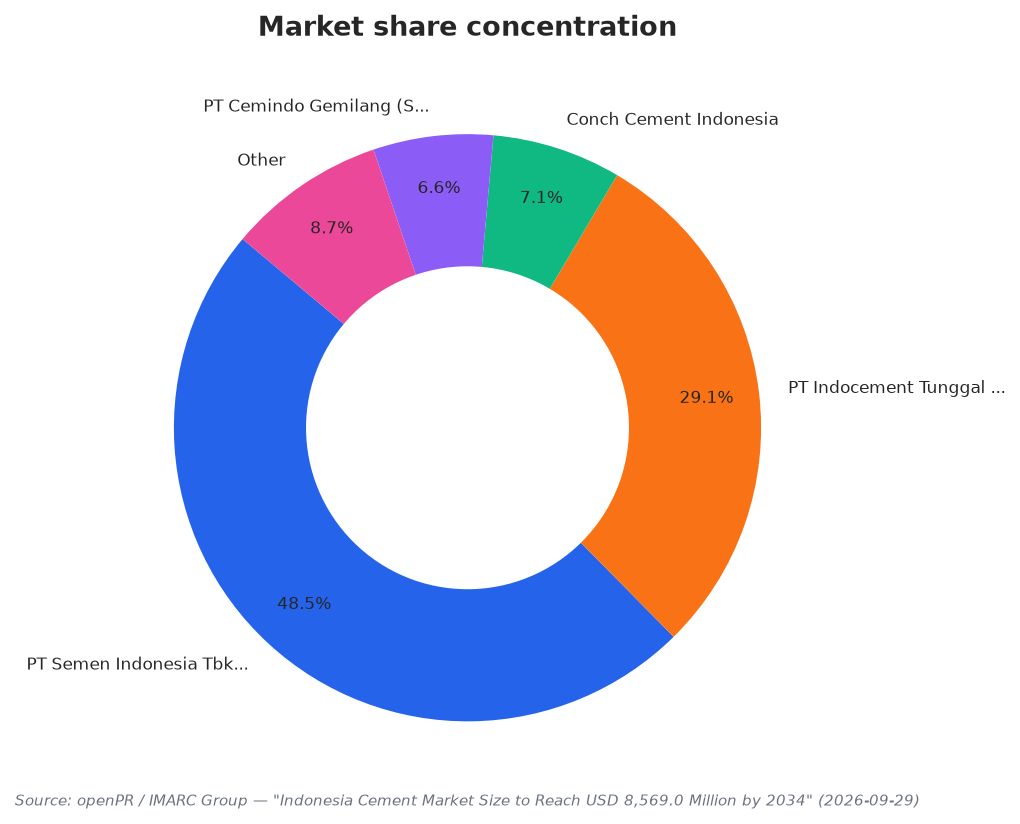
Company-level results show how incumbents are positioning. Semen Indonesia sold 18.3 million tons in H1 2026, up 5.6% (y/y), with domestic sales rising 9.7% (y/y) to 14.2 million tons; domestic bagged cement grew 11.3% (y/y) to 10.4 million tons. Indocement recorded 8.4 million tons in H1 2026, up 5% (y/y), but its total market share was reported at 28.1% amid competitive shifts. Another competitive snapshot lists domestic share at roughly 48.5% for Semen Indonesia and roughly 29.1% for Indocement, with challengers including Conch Cement Indonesia at roughly 7.1% and Cemindo Gemilang at roughly 6.6%. With idle capacity hard to absorb domestically, producers have relied on low-margin clinker exports to markets across Southeast Asia to keep plants running.
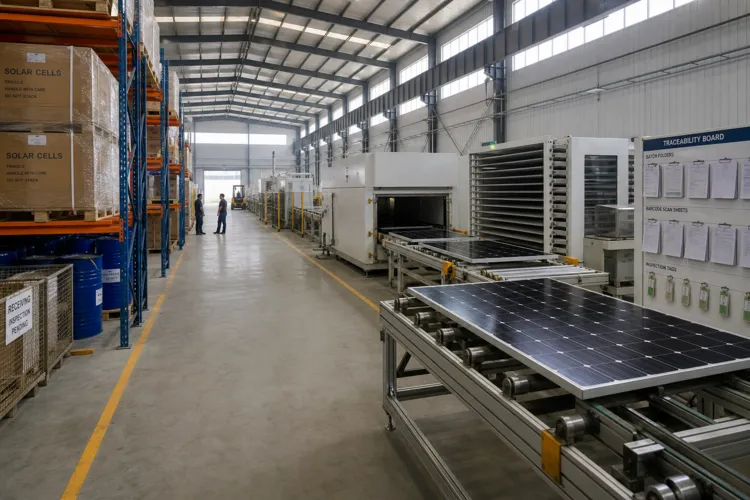
What comes next for building materials players is likely to be a mix of operational tightening and product repositioning rather than a simple volume race. Bagged cement remains dominant, particularly outside Java, yet bulk cement and ready-mix concrete are gaining traction in urban and large-project segments, shifting economics toward silo and batching-plant infrastructure. On the sustainability side, green cement initiatives are moving from pilot to commercial scale, including blended and lower-clinker products that substitute clinker with fly ash, slag, and limestone. Indocement’s announced solar installation provides one illustration of decarbonization-linked investment: a 71.9 MW installation across its Citeureup, Cirebon, and Tarjun complexes projected to generate over 108 million kWh annually and cut more than 85,000 tonnes of CO2 emissions per year.
What is driving the current cement oversupply in Indonesia?
How did cement demand perform in mid-2026 despite the oversupply?
Why is consolidation pressure increasing under Indonesia cement oversupply?
Which end markets matter most for cement demand in Indonesia?
What investments signal the shift toward efficiency and lower carbon operations?