


Indonesia consumer trends reveal a growing advantage for brands that understand local preferences, pricing expectations, and shopping habits. Indonesian companies can compete directly with multinational businesses by adapting products and marketing to domestic consumers, while international brands increasingly need local strategies to remain competitive.
According to The New ASEAN Consumer, a 2023 whitepaper by Eurogroup Consulting produced for the French Foreign Trade Advisors (CCE) APAC Forum, localisation is one of the most important principles for reaching Southeast Asian consumers.
Indonesia offers a particularly relevant example, where local companies compete with international brands across fast-moving consumer goods (FMCG), personal care, and household products.
Do Indonesian Consumers Prefer Local Brands?
Local brand preference is a significant characteristic of Indonesia's consumer market, although purchasing decisions vary by income, age, location, and product category.
World Economic Forum (WEF) research cited in Eurogroup Consulting's 2023 whitepaper found that 60% of urban affluent consumers and 80% of rural, older consumers in Indonesia preferred local brands over global alternatives.
These historical survey findings highlight the importance of domestic brand familiarity, relevant product positioning, and perceived value.
However, local preference does not mean that international brands cannot succeed.
Global companies remain influential in categories where product quality, technical expertise, or brand reputation create a clear competitive advantage.
The distinction lies in how brands communicate value to different consumer segments.
A product's country of origin may matter less than whether it meets local expectations around price, reliability, convenience, and relevance.
The New ASEAN Consumer whitepaper examines the factors behind this preference and the wider localisation trend across ASEAN.
Wings Corp Shows the Competitive Strength of Local Knowledge
Wings Corp illustrates how an Indonesian consumer goods company can compete with established multinational brands.
The company's household and personal care portfolio includes So Klin and Daia, which compete in categories also served by Unilever and Procter & Gamble (P&G).
According to the whitepaper, Wings has strengthened its market position through competitive pricing, locally relevant products, and marketing adapted to Indonesian consumer preferences.
The study also identifies a broader pattern in Indonesia's hot drinks category, where local companies outperformed multinational competitors by approximately 9% annually over the five years preceding its publication.
This historical finding demonstrates the competitive potential of domestic brands, but it should not be interpreted as a current market-share comparison.
Wings illustrates an important commercial principle: local relevance can create a competitive advantage when supported by the right product, price, and distribution model.
For international companies, the lesson is not necessarily to imitate local brands. It is to understand why consumers choose them and identify where global capabilities can deliver additional value.
What Gives Local Brands an Edge in Indonesia?
Local brands often benefit from close relationships with domestic consumers, suppliers, and distribution networks.
These advantages can affect both product development and commercial execution.
Several capabilities are particularly relevant:
- Consumer understanding: Local businesses can identify preferences across regions, income groups, and product categories.
- Pricing flexibility: Domestic sourcing and operating structures may support competitive price points.
- Faster adaptation: Local decision-making can help companies respond to changing customer preferences.
- Distribution access: Established relationships with retailers and intermediaries can support product availability.
However, these advantages are not exclusive to Indonesian-owned companies.
International brands can develop similar capabilities through local teams, manufacturing, sourcing, and partnerships.
Frédéric Bichet, APAC Leader at Decathlon, explains this approach in the whitepaper:
"Decathlon places a strong emphasis on being as local as possible in its operations. The company does not communicate on its French roots, instead focusing on being local in each market it operates in."
His perspective reinforces the importance of adapting international expertise to the preferences of each market.
Indonesia's Young Shoppers Are Changing Brand Discovery
Digital adoption adds another dimension to Indonesian consumer behaviour.
Younger consumers increasingly use online platforms to discover products, compare prices, and access promotions.
A 2020 World Economic Forum youth survey, cited in the whitepaper, found that more than half of young respondents in Indonesia increased their e-commerce purchasing during the COVID-19 pandemic.
This was a pandemic-period observation rather than a measure of current shopping activity.
Nevertheless, the study highlights how digital channels can make brands more accessible and increase consumer choice.
For local companies, online platforms can provide opportunities to reach customers beyond established retail networks.
For international companies, digital marketing creates new ways to test products, understand purchasing preferences, and communicate relevant value.
Yet digital visibility alone cannot guarantee loyalty.
Consumers still evaluate product quality, pricing, availability, and their overall experience.
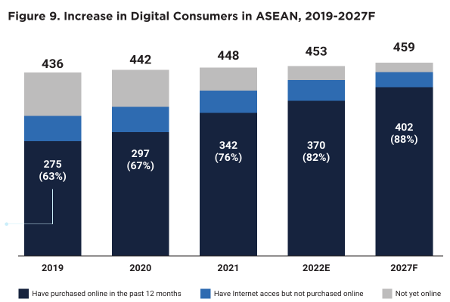
The broader implication is that effective brand positioning must connect digital engagement with local consumer needs.
Turning Localisation Into a Competitive Brand Strategy
Localisation involves more than translating advertising campaigns or adjusting packaging.
Brands need to understand the commercial factors influencing purchases across Indonesian consumer segments.
Several priorities can guide their approach:
- Research local demand: Identify preferences by region, age, income, and product category.
- Adapt the value proposition: Align product features, packaging, quality, and pricing with customer expectations.
- Strengthen local partnerships: Work with suppliers, retailers, and other partners that understand domestic markets.
- Connect digital and physical channels: Ensure brand discovery leads to convenient, reliable purchasing experiences.
Foreign brands should also consider where international expertise remains a competitive advantage.
The whitepaper notes that premium and luxury categories can benefit from international heritage, particularly when brand origin contributes to perceived prestige or quality.
The right balance therefore depends on the consumer segment and product category.
For businesses evaluating these opportunities, Indonesia consumer behavior analysis services can help assess brand preferences, purchasing motivations, and market positioning.
Companies planning expansion can also contact Market Research Indonesia to discuss consumer research and local market strategies.
Frequently Asked Questions
Do Indonesian consumers prefer local or global brands?
Many Indonesian consumers express a preference for domestic brands, particularly in selected everyday product categories. World Economic Forum research cited in Eurogroup Consulting's 2023 study highlights this preference among urban affluent and rural older consumers. However, actual choices depend on quality, pricing, product category, and individual preferences.
Why are local brands strong in Indonesia?
Local brands can benefit from close consumer understanding, relevant product development, competitive pricing, and established distribution relationships. Companies that adapt quickly to regional preferences may also respond effectively to changing demand. These advantages vary by industry and do not prevent international competitors from building strong local positions.
How does Wings Corp compete with multinational companies?
Wings Corp competes in household and personal care products through locally relevant offerings, competitive pricing, and domestic market knowledge. Its portfolio includes brands such as So Klin and Daia. The company's experience illustrates how Indonesian businesses can challenge multinational brands without relying primarily on international brand recognition.
Are younger Indonesian consumers increasingly digital?
Eurogroup Consulting's 2023 study highlights the influence of online shopping, social media, and digital channels on younger Indonesian consumers. A World Economic Forum survey also documented increased e-commerce use during the 2020 pandemic period. Brands should combine digital engagement with pricing, availability, and customer experience.
How can international brands succeed in Indonesia?
International companies can improve competitiveness by researching local consumer segments, adapting products and marketing, establishing suitable partnerships, and maintaining competitive pricing. The appropriate strategy depends on the category. Premium brands may benefit from international heritage, while mass-market products often require stronger localisation and distribution capabilities.
Understand What Drives Indonesian Brand Preferences
Indonesia's consumer market rewards brands that understand local expectations, but successful localisation requires more than adjusting marketing messages.
For consumer goods companies, brand managers, and business leaders, The New ASEAN Consumer provides deeper analysis of localisation, digital shopping, consumer profiles, and practical strategies for competing across Southeast Asia.