
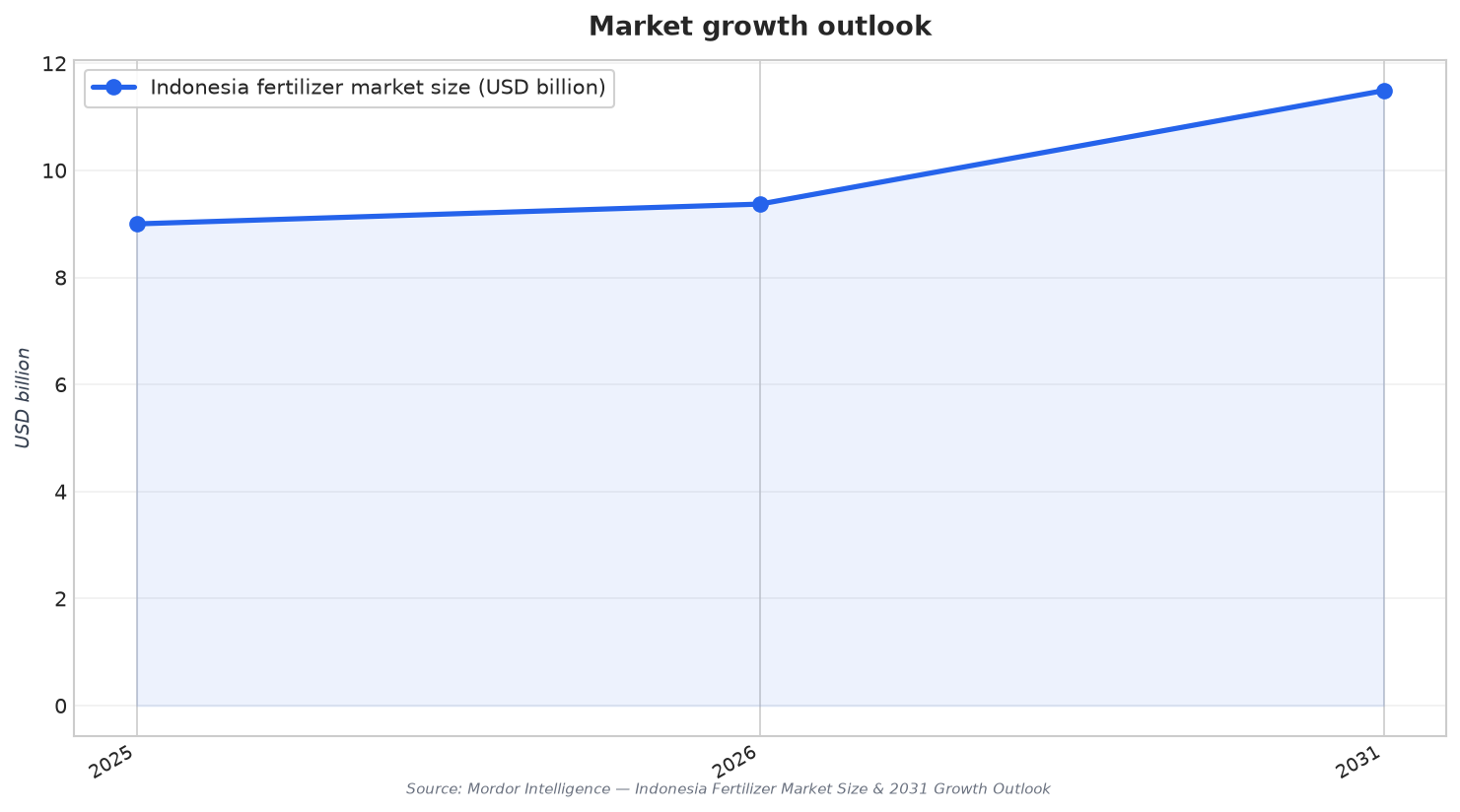
Indonesia’s fertilizer market is large and policy-driven, so subsidy design can quickly create winners and losers across the value chain. Mordor Intelligence values the Indonesia fertilizer market at USD 9 billion in 2025, with estimates rising from USD 9.37 billion in 2026 to USD 11.49 billion by 2031 (4.15% CAGR, 2026-2031). The same source links demand to strong public funding for input subsidies and replanting in aging oil-palm estates. It also highlights that the government allocates 9.5 million metric tons of subsidized product under the Highest Retail Price (HET) scheme, which stabilizes consumption even when natural-gas prices spike and producer margins compress. That policy backdrop is the practical context for any Indonesia fertilizer subsidy reform conversation.
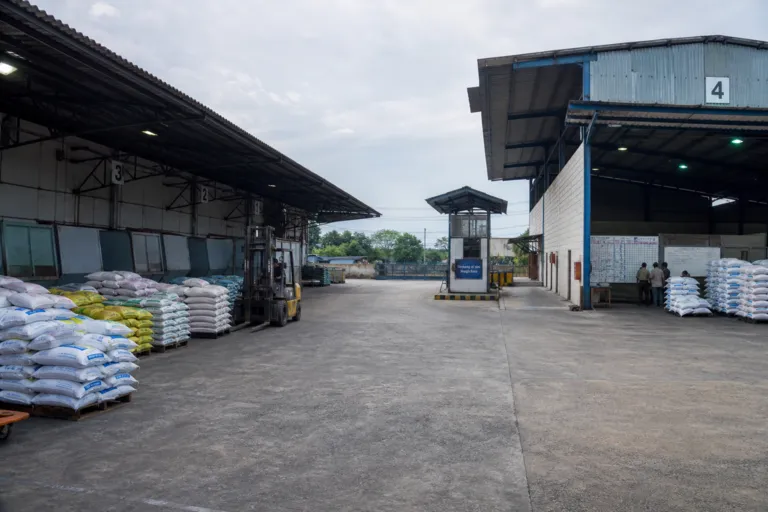
The current subsidy architecture is defined by large earmarked volumes and fixed retail prices. According to the U.S. Department of Commerce country guide, in 2025 the government allocated 9.5 million tons of subsidized fertilizers, including 4.6 million tons of urea, 4.2 million tons of NPK, 500,000 tons of organic fertilizer, and 147,000 tons of cocoa-specific NPK. Mordor adds price points under HET of IDR 2,250/kg (USD 0.14) for urea and IDR 2,300/kg (USD 0.15) for NPK, and describes fiscal outlays approaching USD 3.3 billion, roughly 2.8% of GDP. For planning and compliance, distribution tools matter too: the same country guide notes a three-tier distribution system integrated with the i-Pubers app, allowing farmers to access subsidized fertilizers using their national ID.
Winners, Losers, and Where Supply Risks Can Spike
Smallholders can be the most direct “winners” when subsidized fertilizer is accessible at controlled prices, while larger buyers can benefit indirectly when leakage occurs. Asia News Network reports a warning that if subsidized prices stay too low at around Rp 1,800 per kilogram versus a non-subsidized market price around Rp 6,000, the risk of smuggling or leakage rises from smallholder channels to large-scale agribusinesses. This creates uneven playing fields: compliant distributors and farmers face rationing and uncertainty, while actors able to arbitrage price gaps gain. For agribusiness buyers, the apparent short-term advantage of diverted subsidized supply can translate into long-term policy tightening, higher compliance burdens, and reputational exposure as authorities try to minimize leakages through tools like the e-RDKK farmer database noted by Mordor.
Supply risk is not only administrative; it is also input-and-geo-political. Asia News Network quotes concerns that nitrogen-based fertilizers like urea rely heavily on natural gas, making them vulnerable to global energy price spikes, and notes that urea cost impacts depend on the purchase agreement between Pupuk Indonesia and gas supplier PGN (fixed pricing can limit impact; fluctuating pricing can raise costs significantly). It also states that export restrictions have tightened in China and Russia to ensure domestic availability, while urea production in India and Bangladesh is hampered by shutdowns and routine maintenance linked to limited global natural gas supplies. For Indonesia, the same report warns that Middle East conflict could hit supply chains because the country imports phosphate and potassium from the Middle East and parts of Ukraine, turning nutrient sourcing into a strategic risk factor for food and plantation crop economics.
For agribusiness, the operational takeaway is to plan around both concentration and policy volatility. Mordor describes “extreme market concentration,” with the top five companies—PT Pupuk Kalimantan Timur (PKT), PT Petrokimia Gresik, Wilmar International Limited, PT Saraswanti Anugerah Makmur Tbk, and Agrifert Marketing Pte Ltd (Kuok Group)—holding significant positions through integrated palm oil operations, and it warns that disruption at major producers can affect national food security. At the same time, the country guide notes President Prabowo Subianto approved fertilizer imports to address domestic production shortfalls. In this environment, Indonesia fertilizer subsidy reform is less about a single price change and more about how volumes, verification systems, and import backstops interact—determining who reliably gets product, who pays market rates, and how exposed the system is when global energy or trade restrictions tighten.
What does Indonesia’s subsidized fertilizer allocation include in 2025?
Why does a big subsidy price gap create leakage risk?
What are the key supply risks tied to urea in Indonesia?
How can Indonesia’s fertilizer subsidy reform affect agribusiness procurement strategy?