
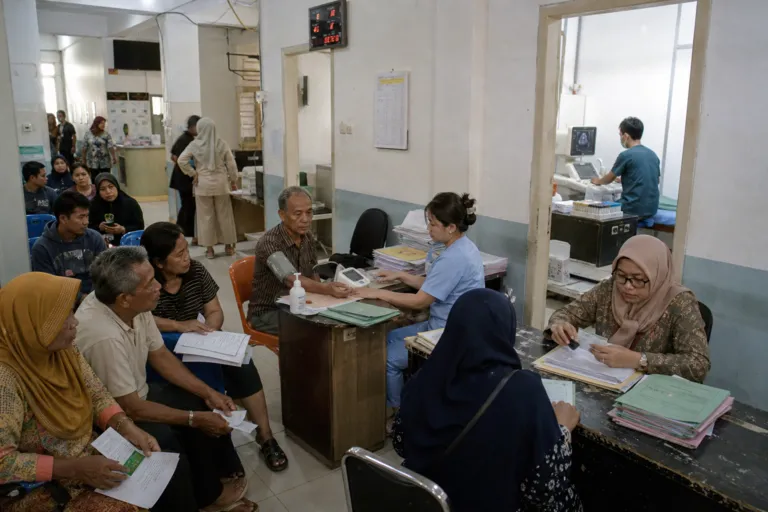
Universal health coverage is the central demand engine in Indonesia. BPJS Kesehatan’s JKN reached 283 million participants, equal to 99.34% of the population by October 2025, according to Mordor Intelligence. Nexdigm also reports coverage of about 277.5 million people, or 98% of the population as of 2024, after enrollment rose from 223 million in 2021 to over 260 million (95%) in 2023. That scale shifts the market toward standardized access and rising utilization across insured facilities, while still leaving room for private upgrades where patients and employers want speed, amenities, or broader benefits than baseline entitlements.
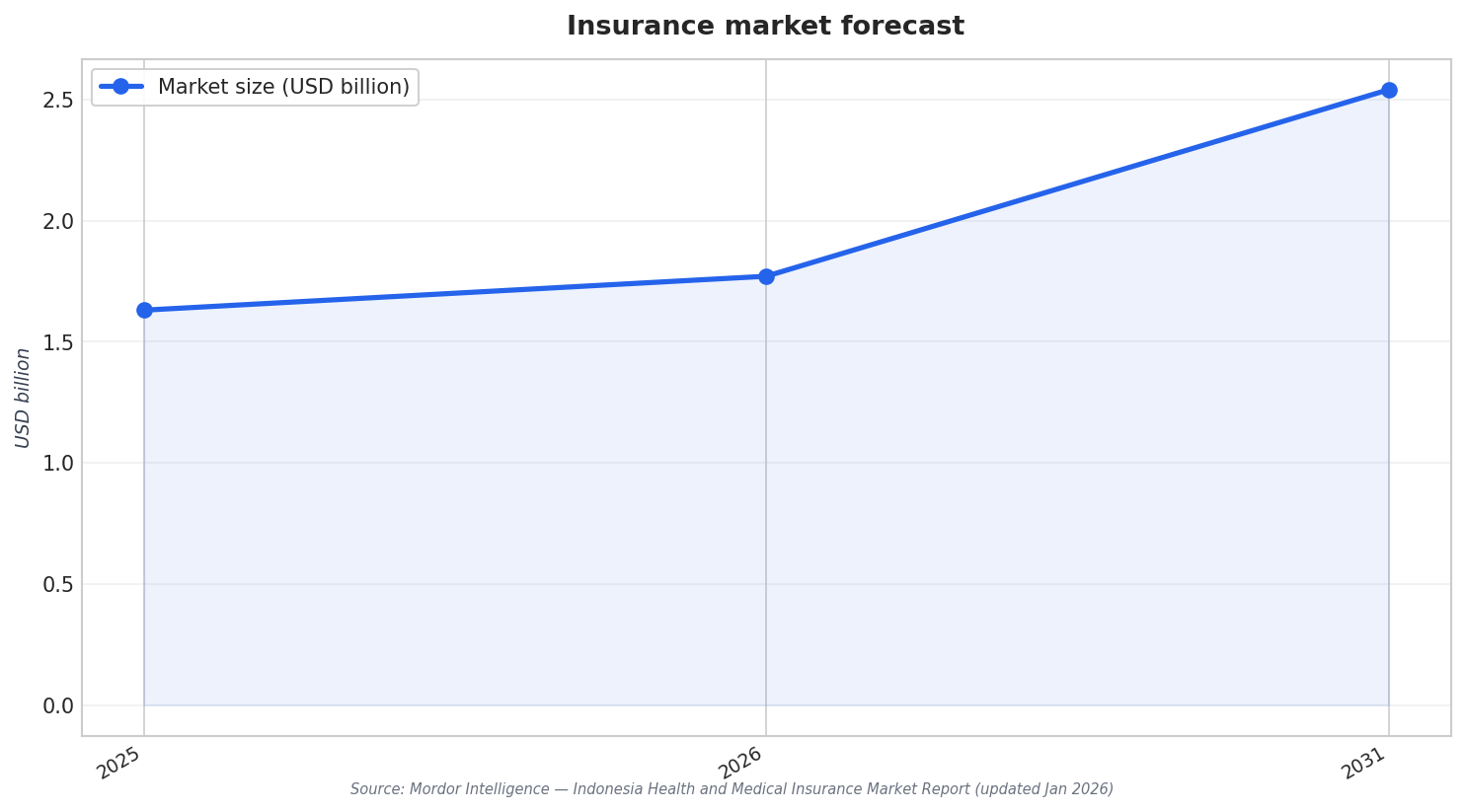
Insurance is one of the clearest investable layers because it sits directly on top of JKN participation patterns. Mordor Intelligence values Indonesia’s health and medical insurance market at USD 1.63 billion in 2025, estimating growth from USD 1.77 billion in 2026 to USD 2.54 billion by 2031 at a 7.48% CAGR. Public and social security schemes led with a 71.62% share in 2025, while private medical insurance is projected to expand at a 9.02% CAGR through 2031. Demand concentrates on supplementary benefits under coordination-of-benefits frameworks. Distribution is also digitizing: OJK-licensed Financial Service Aggregators reached 20 registered providers, with 1,172 institutional partnerships and 13.10 million users in August 2025.
Where Investment Opportunities Cluster: Hospitals, Access Gaps, and Out-of-Pocket Spend
Provider expansion is being pulled in two directions: urban concentration and rural gaps. Ken Research estimates that 32% of healthcare payments in 2024 were paid out-of-pocket, citing coverage gaps and limits in services under JKN. At the same time, it notes that 45% of the population resides in rural and remote areas, where access remains uneven. Capacity constraints are visible in bed density: Ken Research reports 1.2 hospital beds per 1,000 people in 2023. For investors, this combination supports opportunities in scalable provider formats and referral networks that can deliver standardized care while balancing affordability and quality expectations shaped by national coverage.
Hospitals remain the largest service pool and an active destination for private capital. Ken Research values the Indonesia hospital market at USD 19.5 billion in 2023 and links growth to increasing demand and investments in building new hospitals and modernizing facilities. Nexdigm adds that hospital services dominated market share at about 60% in 2024, and that private hospitals and clinics led with roughly 55% market share in 2024, reflecting consumer willingness to pay for faster service and advanced specialties. Its competitive landscape highlights major private groups including Siloam, Mitra Keluarga, Mayapada Healthcare, Hermina, and Omni Hospitals, alongside digital platforms such as Halodoc and Alodokter that influence patient journeys.
Diagnostics and connected care extend the investment map beyond bricks-and-mortar. Grand View Research describes rapid growth in the government segment of medical imaging, driven by increased public healthcare spending and initiatives to improve diagnostic access, including deployment of CT, MRI, ultrasound, and nuclear imaging systems. It also states the private segment held the largest share in 2025 as providers adopt advanced imaging to enhance diagnostic accuracy and attract patients. On digital infrastructure, Mordor Intelligence values the Indonesia connected healthcare market at USD 1.13 billion in 2026, projecting a 27.4% CAGR to USD 3.81 billion by 2031; solutions held 62.20% share in 2025, while services are projected to grow at a 28.1% CAGR to 2031. It also notes 5G pilots with latency below 25 milliseconds and references budget allocations within a USD 4 billion modernization program backed by the Asian Infrastructure Investment Bank, alongside interoperability momentum around the SATUSEHAT platform.
What is driving demand growth across Indonesia’s healthcare ecosystem under universal coverage?
How fast is the health and medical insurance segment expected to grow in Indonesia?
What structural gaps create investment opportunities in healthcare providers?
Which parts of the Indonesia healthcare market are most tied to hospital expansion?
How is connected care changing investment priorities in Indonesia?