Indonesia’s copper smelting story sits at the intersection of concentrate supply timing, export destinations, and a push to capture more value inside the country. Market data shows that Indonesia’s copper ores and concentrates market surged to $X in 2025, up by X% year over year, even as consumption showed a slight reduction over the broader period covered. The market reached a peak level at $X in 2019, and from 2020 to 2025 consumption stayed at a somewhat lower figure. For planning a copper-processing pipeline, that combination matters: near-term market value can rise while the underlying consumption picture remains uneven, which can influence how quickly new capacity should ramp and how much working inventory is needed.
On the upstream side, copper ores and concentrates production in Indonesia amounted to $X in 2025 (estimated in export price). Across 2012 to 2025, total production value increased at an average annual rate of X%, with noticeable fluctuations. Based on 2025 figures, production decreased by X% against 2022 indices, after a standout year in 2022 when production volume increased by X% and production value hit a peak of $X. From 2023 to 2025, production growth stayed at a lower figure. This profile is relevant for smelter project schedules because feedstock availability and price-linked production value can change meaningfully across a short window, affecting commissioning plans and concentrate procurement strategies.
Offtake Signals: Where Indonesia’s Concentrates Have Been Going
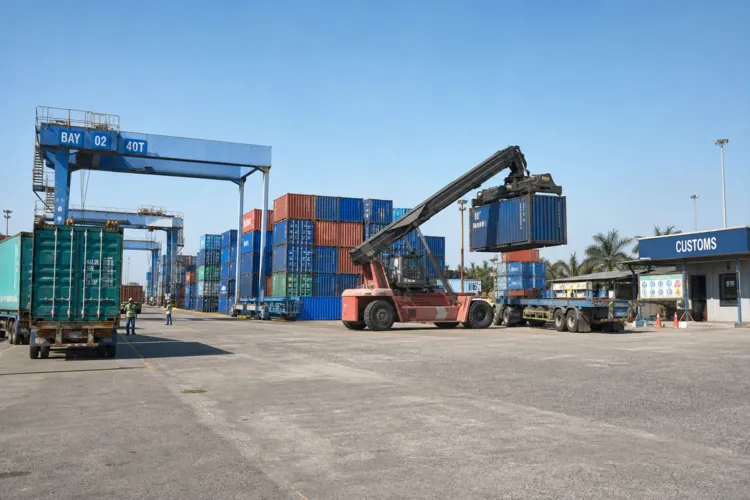
Export flows provide concrete offtake clues for investors thinking about concentrate-to-metal conversion. In 2025, Indonesia’s overseas shipments of copper ores and concentrates decreased by X% to X tons, falling for the second consecutive year after three years of growth. Exports still showed a strong increase over the period, with the most rapid pace in 2015 when exports increased by X%. Volumes peaked at X tons in 2022, but exports did not regain momentum from 2023 to 2025. In destination terms, China (X tons), Japan (X tons), and South Korea (X tons) were the main markets, holding a combined X% share of total exports. In value terms, Japan ($X), China ($X), and South Korea ($X) also led, again with a combined X% share, framing the most visible counterparties when considering future concentrate diversion into domestic smelting.
Smelting output anchors the discussion on metal availability. World Bureau of Metal Statistics data cited by Statista puts Indonesia’s production of copper from smelting at about 280.4 thousand metric tons in 2021. Downstream planners also need to separate refined copper products carefully by scope. One Indonesia refined copper market report defines coverage as unwrought, unalloyed refined copper forms such as cathodes, sections of cathodes, billets, and wire-bars, while excluding items like copper anodes for electrolytic refining and copper semis (plates, sheets, strip, foil, tubes, pipes, rods, bars, profiles, wire). That boundary affects what “downstream” means in practice, and it can change the addressable offtake pool for new metal output once concentrates are converted.
The opportunity case increasingly extends beyond smelting into manufacturing depth. A policy-focused analysis argues that Indonesia leads in nickel processing but lags in manufacturing, and it recommends extending incentives into manufacturing, integrating industrial parks with local suppliers, sequencing downstream industries by technological readiness, requiring meaningful technology transfer and workforce development, and strengthening environmental and workplace standards. It also claims that investing similar capital into 30–50 component factories could generate 15,000–25,000 jobs, compared with 3,000–5,000 jobs from a single base-metal smelter. In parallel, sector-level context shows Indonesia’s base metal mining market at USD 36 billion in 2023, and another outlook expects Indonesia’s copper mining market revenue to reach US$ 4,644.1 million by 2030, with a 0.3% CAGR from 2023 to 2030. For Indonesia copper smelter investment decisions, these signals reinforce that offtake strategy should include not only metal buyers but also viable domestic component and fabrication pathways that can absorb refined copper forms.
What do recent export trends imply about concentrate availability for domestic smelting?
Which countries have been the main destinations for Indonesia’s copper concentrate exports?
How much copper has Indonesia produced from smelting in recent data?
What does the refined copper market scope include and exclude in the cited report?
How should investors frame Indonesia copper smelter investment opportunities alongside downstream manufacturing?