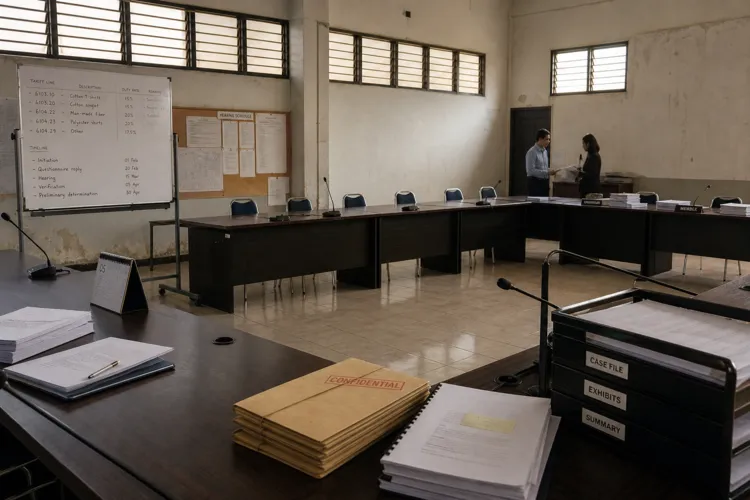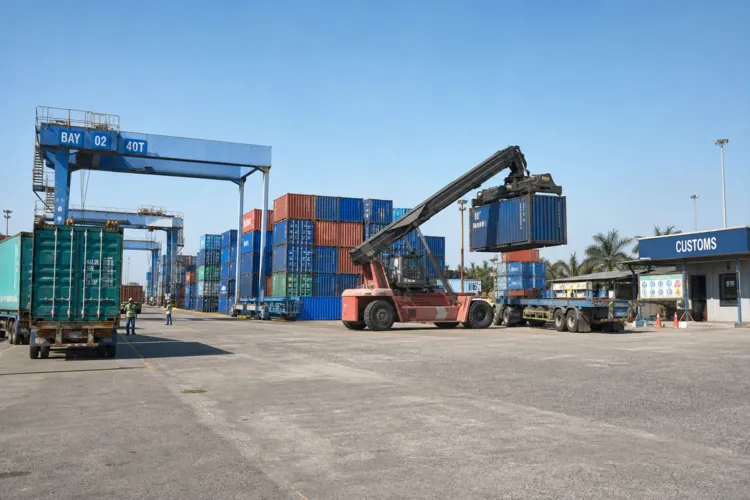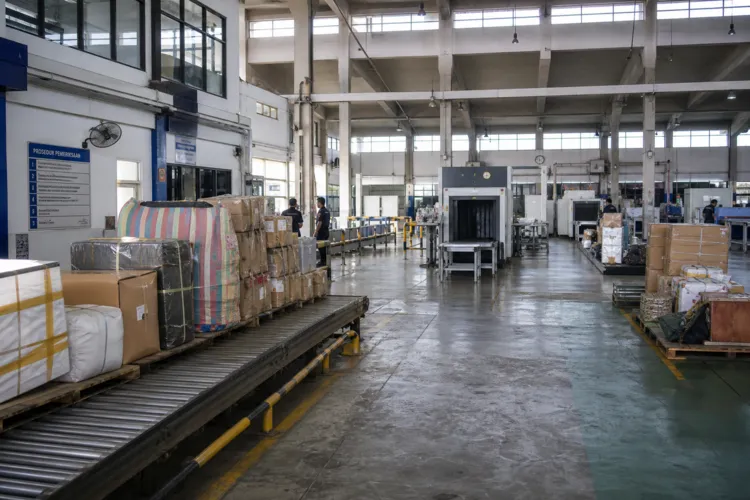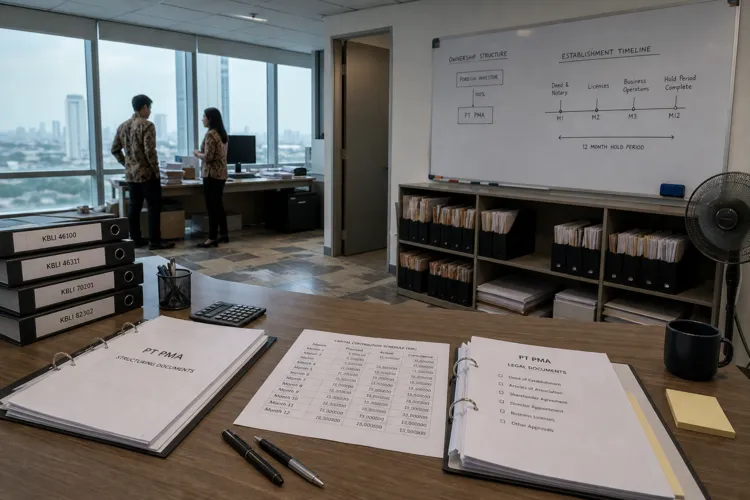
Indonesia’s TKDN framework (Tingkat Komponen Dalam Negeri) is a local content regulation that requires goods and services, especially those tied to government procurement, to include Indonesian-made components. It is positioned as a tool to boost domestic manufacturing, create jobs, and reduce reliance on imports. TKDN affects many regulated and strategic sectors, including energy and electricity, telecommunications, electronics and IT hardware, automotive and EVs, medical devices, and construction equipment and infrastructure. For companies supplying government projects, the rules can directly decide eligibility and procurement priority, which makes TKDN planning a commercial issue, not just a legal one.
How you earn TKDN points matters for sourcing strategy. For goods, the calculation uses production factors with set weightings: direct materials at 75%, direct labour at 10%, and indirect factory overhead at 15%. That weighting makes material and component sourcing the biggest lever for many products. One legal summary notes that sourcing all raw materials and components domestically can achieve a TKDN of up to 75%. It also notes that if the employees and factory overhead factors reach their maximum weightings, a TKDN of 25% can still be achieved from those two factors alone. In solar, a “cost-based” approach is described, where the final percentage is determined by the ratio of local production costs to total production cost, across materials, labor, and production overhead.
Compliance Costs: Where They Hit and Why They Matter
Compliance friction shows up in both time and money. One implementation challenge cited is a lengthy certification process that can delay time-to-market, alongside high compliance costs, especially for SMEs, plus unclear rules and inconsistent enforcement across industries. A sector example comes from consumer electronics: an Indonesia market report estimates regulatory compliance costs, including POSTEL certification, TKDN local-content requirements, and energy-efficiency labeling, add about 8–15% to the landed cost of imported devices. The same report estimates that TKDN certification investments—often done via packaging, manual assembly, and software localization rather than substantive local PCB manufacturing—add roughly 3–7% to unit cost. These are practical cost lines that procurement and pricing teams must plan for early.
Recent reforms change how companies should sequence compliance. Presidential Regulation No. 46 of 2025 introduced tiered procurement priorities based on TKDN plus Company Benefit Weight (BMP), and it uses an incentive-based scoring model to reward localization efforts. For procurement, products with a combined TKDN + BMP score of at least 40% and a minimum TKDN of 25% are prioritized. The same reform package also aims to accelerate certification from three months to 10 days and applies equally to local and foreign firms. In parallel, the Ministry of Industry’s Regulation No. 35 of 2025 (issued 11 September 2025 and effective 11 December 2025) is described as setting general TKDN and BMP rules and aligning the policy with a more value-added localization approach rather than mere assembly-based operations.
A practical sourcing strategy should therefore combine “quick-win” compliance moves with a defensible audit trail. A law firm update advises companies to maintain comprehensive audit trails covering material sourcing, labour expenditures, and local vendor transactions to substantiate declared domestic-content percentages. It also notes that LVIs will conduct post-certification monitoring throughout a five-year validity period, and inconsistencies between reported and actual TKDN values may lead to suspension or revocation. For regulated-market entry, case examples show the stakes: a guide notes Apple could not launch iPhone 16 for seven months because it lacked the required 35% TKDN certification, and that it invested $160 million (about IDR 2.6 trillion) upfront for iPhone 17 compliance. The practical takeaway is to plan sourcing, documentation, and verification together, not as separate workstreams.
What do Indonesia’s TKDN local content rules require businesses to do?
How is TKDN calculated for goods, and which lever matters most?
What compliance cost ranges have been estimated for imported consumer devices in Indonesia?
What procurement threshold is highlighted under Presidential Regulation No. 46 of 2025?
What ongoing compliance steps do companies need after TKDN certification under MOI Regulation No. 35/2025?