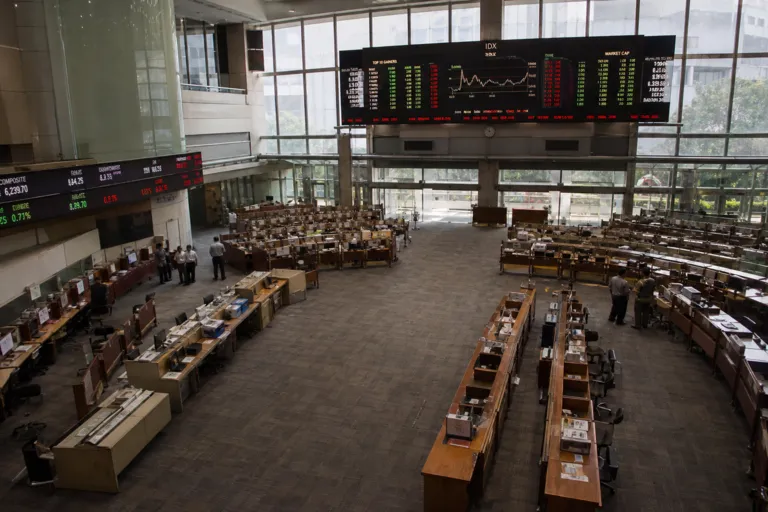
The Indonesia IPO market outlook is increasingly tied to one structural question: how quickly companies and investors adapt to stricter free-float rules. Regulators have framed the overhaul as part of a broader effort to keep the market credible and investment-worthy, following international scrutiny around investability concerns. The direction is clear in the details: the IDX is tightening the definition of what counts as free float, raising ongoing thresholds, and introducing more explicit controller obligations. For issuers preparing to list, these changes can reshape how much stock must be offered, who can be counted toward float at listing, and how long key shareholders must remain locked up.
Market context helps explain the urgency. The Financial Services Authority (OJK) said the IHSG rose 18.57% to 8,394 between January 1 and November 7, 2025, and set 13 all-time highs, with more than 10 occurring in the prior two months. Over the same period, market capitalization was reported at Rp 15,316 trillion (US$915 billion), equal to 69.18% of national GDP, surpassing a government RPJMN target of 68% and nearing OJK’s roadmap target of 70%. Trading indicators also strengthened: average daily transaction value reached Rp 16.64 trillion versus a 2025 target of Rp 13.65 trillion, daily active investors hit 228,000, and registered domestic investor IDs (SID) reached 19.1 million, up 4 million since the start of 2025.
What the New Free-Float Framework Changes for IPO Structuring
The most material shift is that the IDX moved from an equity-based approach to a market-capitalization-based approach for setting minimum free-float thresholds at initial listing. Another practical break is the exclusion of pre-IPO shareholders from the initial free-float calculation, which means some companies can no longer rely on existing minority holders to “top up” the float at the IPO stage. The rule set also formalizes controller lock-ups and tightens ongoing obligations. For continuous compliance, all listed companies must maintain at least 50 million free-float shares representing at least 15% of total listed shares, and have at least 300 shareholders with SID. Main Board issuers face additional requirements, including free-float market capitalization exceeding IDR 200 billion and at least 750 SID shareholders.
Timelines and thresholds are also becoming more explicit. The IDX announced a staged move to a 15% minimum free float for listed companies from a current 7.5% minimum. It also outlined deadlines tied to market value: companies below 5 trillion rupiah market value are required to meet 15% free float within 3 years by 31/3/29, while companies above 5 trillion rupiah market value must reach 12.5% within 1 year by 31/3/27 and 15% within 2 years by 31/3/28. For new listings, the minimum free float range is described as increasing to 15% to 25% from a current 10% to 20% range. The IDX also has authority to set a different minimum number of free-float shares for IPOs raising at least IDR 30 trillion.
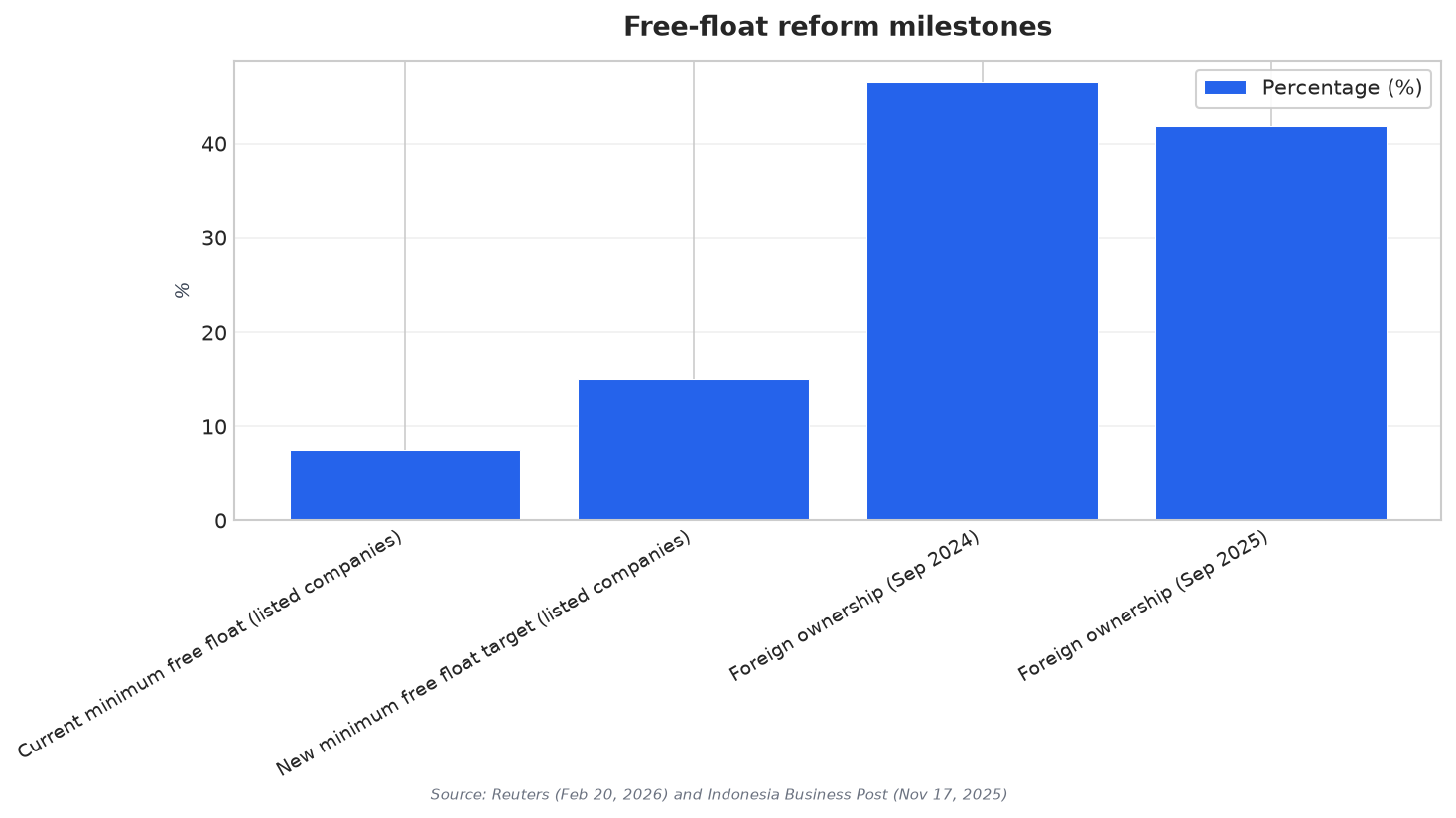
Whether the listing pipeline revives depends on execution as much as rule design. Reuters reported that raising the minimum free float to 15% from 7.5% could affect nearly one in three IDX companies, and that—assuming no delistings—companies would need to offer a combined 187 trillion rupiah (US$11.08 billion) worth of shares to the public. This potential supply is why some market participants see the reform as a turning point, but also why others warn about near-term volatility if the transition is not handled with sensitivity to liquidity dynamics and price stability. For IPO candidates, tighter free-float definitions and lock-up rules reduce structuring flexibility, yet they may also support investor confidence if they improve transparency and liquidity standards in practice.
What is driving the current Indonesia IPO market outlook?
What minimum free-float level is the IDX aiming for in listed companies?
How do the timelines differ for companies above and below 5 trillion rupiah market value?
Why does excluding pre-IPO shareholders from initial free float matter?
How large could the new share supply be if companies comply without delisting?