Indonesia’s logistics cost problem is not just about freight rates. It is also about predictable transit times, dwell time, and the ability to execute multi-island distribution without friction. The market is large and still expanding. Ken Research values the Indonesia logistics market at USD 131,200 million in 2025 and projects it to reach USD 188,380 million by 2031, a 6.2% forecast CAGR. That growth raises the stakes: if bottlenecks persist, more volume simply means more congestion and coordination gaps. But if operators and investors target the right constraints, the same demand can fund structural efficiency gains.
Several bottlenecks show up in daily operations. In Jakarta, congested urban arteries limit average delivery speeds to 10–15 km/h, which Mordor Intelligence links to higher per-package costs and a shift toward micro-fulfillment, two-wheeler fleets, and AI-driven route planning. Indonesia’s geography adds another layer of complexity. Technavio flags inherent geographical complexity as an operational barrier, and it also highlights a shortage of skilled logistics professionals that can constrain firms from leveraging advanced analytics and automation. This talent bottleneck matters because many of the cost levers now depend on software, data, and process redesign, not only new assets.
Where the Bottlenecks Create Investable Freight and Port Plays
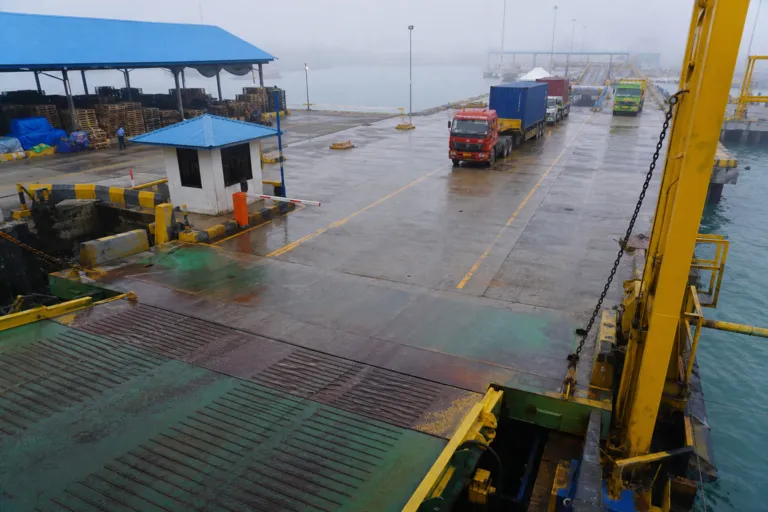
Ports and port-connected corridors sit at the center of both the problem and the opportunity. Ken Research notes that Pelindo handled approximately 18.8 million TEUs in 2024, underscoring how port performance affects national distribution economics. MarkWide Research adds that a National Logistics System roadmap is coordinating port-to-road infrastructure and points to reduced dwell times at Tanjung Priok and faster container velocity as an intended outcome. Meanwhile, Mordor Intelligence describes INAPORTNET port digitalization as a lever that shaves customs dwell times. Together, these points support an investment thesis focused on port digitization, gate and yard process upgrades, and inland connectivity that reduces time lost between ship, terminal, and truck.
National infrastructure spending is another channel for lowering logistics costs, but benefits depend on integration. Mordor Intelligence states that the National Strategic Projects program channels USD 400 billion into roads, ports, and airports, and that transit times between Java’s industrial hubs can be cut by as much as 40%. It also cites over 2,700 km of new tollways that integrate inland factories with main ports. These gains create opportunities in freight forwarding and warehousing placement, especially for firms that redesign multimodal routes and warehouse footprints around improved linehaul reliability. However, Mordor Intelligence cautions that benefits accrue gradually as supporting hinterland rail spurs and industrial estates come online.
Demand-side shifts are intensifying the need for efficient networks, and they clarify what to invest in. Ken Research reports Indonesia’s e-commerce gross merchandise value at approximately USD 71,000 million in 2025, which increases demand for distributed inventory, parcel sorting, returns management, and predictable last-mile delivery. MarketReportsWorld adds that domestic sea freight reached 508.4 million tons in 2025 and railway freight reached 74.1 million tons in the same year, highlighting the scale of modal decisions. For investors tracking the Indonesia logistics sector outlook, the most direct plays align with automated sorting, digital shipment visibility, route optimization, cold chain infrastructure, and integrated multimodal services that can convert growing volumes into higher reliability and lower avoidable cost.
What operational bottleneck most directly inflates last-mile costs in Indonesia?
Which port-related metrics show the scale of Indonesia’s gateway dependence?
What infrastructure figures point to potential transit-time improvement on Java?
What does the Indonesia logistics sector outlook suggest about e-commerce-led requirements?
Which capability gap can limit returns from logistics technology investments?