Indonesia’s tourism economy is entering a new phase where “quality” matters as much as raw arrival totals. Hotels, resorts, and local businesses have reported improved occupancy rates and higher spending per visitor, aligning with a national strategy that emphasizes longer stays and higher-value experiences. The push is also tied to “experience-based tourism,” alongside efforts to improve safety standards. This is not a Bali-only story, even though Bali remains a core driver. The approach is to widen the map while improving the end-to-end visitor experience across hospitality, transport, and retail.
Market forecasts underline why the sector is drawing attention. Technavio projects Indonesia’s tourism and hotel market size will increase by USD 12.24 billion at a 6.5% CAGR from 2025 to 2030, and notes the domestic segment was valued at USD 25.16 billion in 2024. A separate outlook from Market Report Analytics projects a market size of $29.47 billion in 2025, with a 6.2% CAGR from 2025 to 2033. Both sources frame growth around diversified offerings, infrastructure improvements, and sustainability considerations, while also pointing to risks such as global economic uncertainty and environmental impact that operators must actively manage.
Beyond Bali: Gateways, “Bali +1,” and Priority Destinations
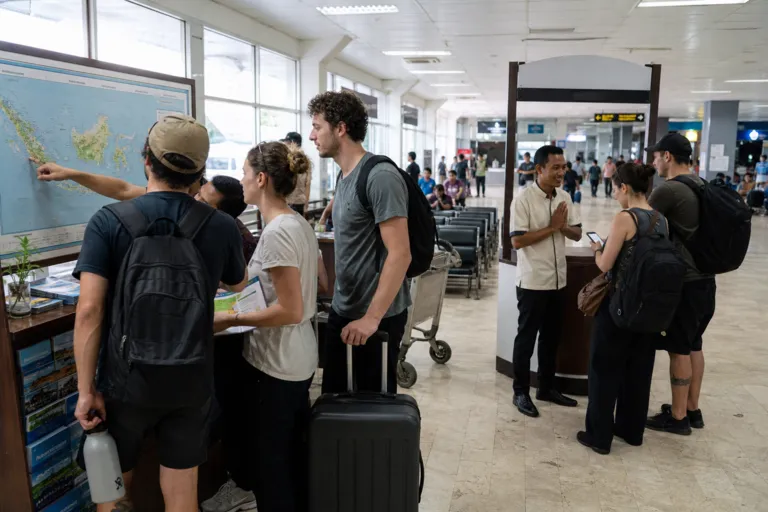
Indonesia is explicitly trying to spread demand beyond its most famous island. Established gateways such as Jakarta, Bali, and Batam/Bintan continue to account for around 70% of international arrivals, showing how concentrated access still is. In air travel specifically, Ngurah Rai International Airport in Bali remained the primary entry point, followed by Jakarta–Soekarno–Hatta International Airport; together they accounted for nearly 90% of all air arrivals in November 2025. The policy response is targeted development in places such as Borobudur, Mandalika, Labuan Bajo, Wakatobi, Raja Ampat, and Morotai, plus priority areas including Lake Toba, the Riau Islands (Batam and Bintan), and Belitung Island. For India, a “Bali +1” strategy encourages extensions to destinations such as Yogyakarta, supported by expanded air connectivity.
Quality tourism also means programming, not just scenery. In 2023, Indonesia’s Ministry of Tourism supported 99 major events spanning national, international, and MICE activities; these events supported approximately 260,000 jobs. On the demand side, ASEAN remains Indonesia’s largest source market, particularly for repeat visitation. In 2025, Malaysia was the largest contributor, ranking first month-by-month and accounting for more than 14–15% of total arrivals in several months, while Australia followed as the second-largest market with strong leisure demand, particularly to Bali. Looking ahead, Indonesia aims to record 16 to 17 million foreign tourist arrivals in 2026, a goal framed alongside the shift toward experience-led travel rather than numbers alone.
Operators are also adapting with technology and new stay patterns. Technavio highlights that digital nomad visas and extended-stay remote work infrastructure are driving demand, pushing developers to integrate co-working spaces and high-speed connectivity. It also describes hotel chains deploying smart climate control sensors and automated inventory distribution systems, delivering a 14% improvement in energy efficiency compared with legacy climate infrastructure. Alongside digitalization, destination positioning stresses experiences, including wellness. Indonesia ranks among the leading global destinations for wellness, spa, and complementary medicine, with newer offerings such as Javanese yoga being developed beyond Bali, including in Solo and Yogyakarta. Together, these moves support a tourism economy that can grow while steering visitors toward higher-value, more sustainable travel choices.
What is driving Indonesia’s shift toward “quality tourism”?
How concentrated are Indonesia’s international arrivals in a few gateways?
Which destinations are being developed to spread tourism beyond Bali?
What do forecasts say about the Indonesia tourism industry’s market growth?
How is technology changing hotel operations in Indonesia?