
Indonesia’s halal economy is often discussed in broad terms, but recent sources provide measurable reference points for market size, certification, and trade. In halal food and beverage, one Indonesia-focused market source values the Indonesia Halal Food and Beverage Industry Market at approximately USD 282 billion (published October 2025). Another market source estimates Indonesia’s halal food and beverage market at USD 85,751.32 million in 2025 and projects USD 121,127.42 million by 2034, describing growth tied to certified halal food adoption. These figures sit within wider global context: one global report projects the global halal market rising from USD 312.45 billion in 2025 to USD 598.72 billion by 2033, while another places the global halal foods market at USD 2.7 trillion in 2025 and USD 6 trillion in 2034.
Within Indonesia’s domestic halal food and beverage landscape, segmentation details highlight where demand is concentrated. A 2025 Indonesia report describes halal meat and poultry as the leading sub-segment, supported by high demand for meat products and a shift toward packaged and processed meat. The same source states households are the largest end-user segment, linking growth to daily purchasing decisions, modern retail expansion, and e-commerce. A separate market report adds consumption and demand-side signals: it states Indonesia alone consumes over 100 billion meals annually that are halal-certified, and it also describes Indonesia as leading global halal food consumption with over 225 million Muslim consumers in 2024. On the supply side, the same report notes Indonesia imported over 240,000 tons of halal meat in 2023, up from 210,000 tons in 2022, showing a year-over-year increase in inbound volumes.
Certification And Traceability: From Compliance to Market Access
Certification is repeatedly positioned as a growth lever because it shapes trust and unlocks distribution across markets. A global halal foods analysis notes that infrastructure and certification help expand the market in Asia Pacific, and it explicitly references Indonesia’s BPJPH/MUI as a regional certification framework serving localized needs. Another global outlook highlights “digital halal certification platforms and traceability systems” as a trend reshaping transparency and trust, and points to blockchain-based verification and smart supply chains as part of this structural shift. For Indonesia-specific certification activity, one market source states Indonesia issued 1,200 halal certifications in 2023 alone. In product development, the same source reports that in Indonesia, halal beverage launches made up 18% of new products in 2023, aligning certification and launches with a measurable share of innovation activity.
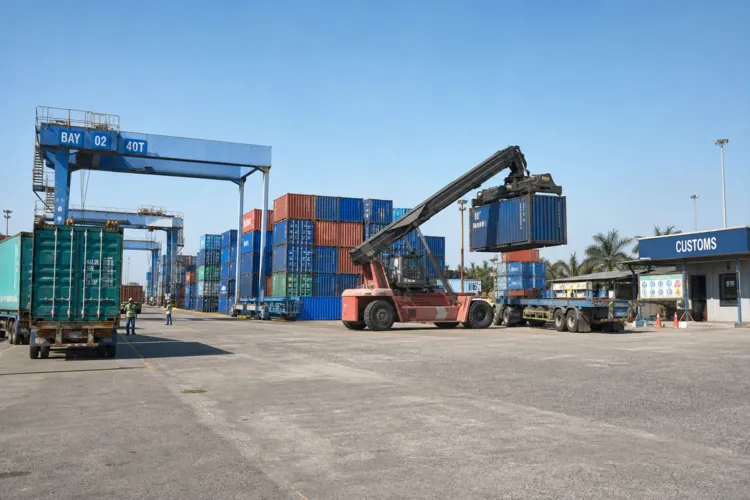
Exports are a key lens for evaluating Indonesia’s halal economy, and one 2024 trade snapshot provides a clear benchmark. From January to October 2024, Indonesia reported halal product exports totaling US$41.4 billion, with processed halal food leading at US$33.61 billion, accounting for 80%. The same source also relays that the Trade Ministry of Indonesia suggested five key export destinations for Indonesian halal products: Malaysia, the United Arab Emirates, Turkey, Thailand, and Saudi Arabia. In the broader competitive context, another report notes Malaysia exported over $10 billion worth of halal products in 2023, which can serve as an external comparison point rather than a direct indicator for Indonesia.
Putting these signals together, the Indonesia halal industry story is not only about domestic demand; it is also about how certification capacity and export performance interact. Market sources emphasize that halal food and beverage remains central, while certification systems—especially as they move toward digital verification and traceability—support brand credibility and cross-border acceptance. Export data for 2024 indicates that processed halal food can dominate value, and the listed target markets suggest a practical route for trade prioritization. Meanwhile, continued imports of halal meat alongside strong reported consumption illustrates that supply balancing, certification execution, and product innovation all matter in determining how Indonesia positions itself within Asia-Pacific-led halal growth narratives.
What is the estimated size of Indonesia’s halal food and beverage market?
How active is halal certification in Indonesia?
How strong are Indonesia’s halal exports, based on recent figures?
What do import trends say about halal meat demand in Indonesia?
What is driving momentum in the Indonesia halal industry besides market demand?