Indonesia’s consumer economy still runs on household spending. Krungsri notes that private consumption accounted for 55.8% of GDP in the first quarter of 2026, which is why the shape of demand matters as much as top-line growth. Yet multiple sources point to a smaller “established middle class” alongside steady macro expansion. AsiaCommerce reports national statistics showing this group fell from 21.45% of the population in 2019 to 16.6% by 2025, while the economy grew 5.29% in the second quarter of 2026. For brands, this is the operating reality behind the debate about an Indonesia middle class decline: the addressable “default” customer is not expanding evenly, and pricing assumptions built on broad middle-class upgrading can misfire.
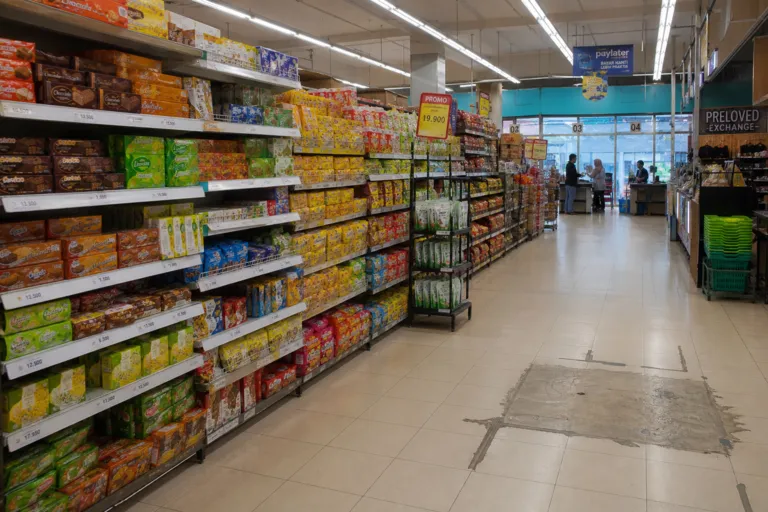
On the ground, the shift shows up in how Indonesians shop, not only what they buy. IDN Research Institute describes the viral “Rojali” and “Rohana” labels in mid-2025 for crowds that browse malls but rarely transact, a pattern summarized as “crowded visitors, quiet cash registers.” The phenomenon was significant enough that APPBI’s Jakarta chapter launched “Rojali Transformation 2.0” in late November 2025 to turn groups into buyers, indicating operators saw an operational issue, not a messaging problem. IDN also ties changing purchase decisions to increasing selectivity, movement to online channels, and reliance on social proof such as user reviews. It also reports a thirty-seven-fold gap in used-clothing import records, signaling a preloved market far larger than official statistics suggest.
What Demand Is Turning Into: Value, Flexibility, and Uneven Upgrading
Brands need to price for a barbell market. AsiaCommerce frames Indonesia’s pattern as K-shaped: household consumption overall grew 5.06%, but it says that growth was driven largely by leisure spending among higher-income groups. The same source points to deposit insurance agency data showing declining balances in accounts under 100 million rupiah, interpreted as households drawing down savings to cover daily costs. Inequality also widened, with AsiaCommerce citing a Gini ratio at 0.368 even as extreme poverty fell to 8.07%. In practical terms, this can mean premium and experiential demand persists at the top, while much larger volumes move toward value and mid-range offers, smaller packs, and clearer price-to-quality proof points.
The biggest “growth” story is often below the established middle class line. AsiaCommerce says the “aspiring middle class” totals roughly 137.5 million people, over half the population, with spending between roughly 874,000 and 2.04 million rupiah per person monthly. It also notes how informal work such as ride-hailing, delivery, and micro-business roles can provide income without stability, making this segment more exposed to shocks and more price-sensitive. That is where payment design becomes part of pricing. IDN Research Institute observes that household consumption is still growing but is propped up by credit and buy-now-pay-later schemes, while spending priorities shift toward basic needs and technology. Kadence adds that 73% of e-commerce transactions are made via mobile devices, reinforcing how quickly value discovery and conversion can move online.
Finally, segmentation inside “the middle class” needs to be explicit in brand architecture. Mori Hamada warns that strategies often assume a single middle market, but outcomes depend on where consumers actually concentrate; it notes that products targeting the “average” middle class are those spending around IDR 5.1 to 8.0 million. FULCRUM also stresses that definitions drive narratives, highlighting disputed estimates and reminding readers that there is no single middle-class cutoff; it points to how different poverty lines can produce starkly different rates, including an example where using the World Bank’s line for upper-middle-income countries yields 62% in 2023 versus 9.4% using Indonesia’s national poverty line. The brand implication is to stop treating “middle” as one price point. Build tiers, protect entry-level volume, and defend trust with reviews, transparency, and channels that match how Indonesians now decide.
What evidence suggests Indonesia’s middle class is shrinking even as growth stays positive?
How is the Indonesia middle class decline showing up in day-to-day shopping behavior?
Which consumer segment is expanding beneath the established middle class?
What numbers point to uneven benefits across income groups?
What channel and decision cues should brands prioritize as demand shifts?