Any discussion of indonesia informal economy size starts with a simple tension: Indonesia is moving money digitally at massive scale, while work remains highly informal. Bank Indonesia recorded digital payment transaction volumes reaching 5.22 billion in May 2026, a 28.14% year-on-year increase. In the same period, QRIS transactions surged 95.10%. Yet the national labor force survey (Sakernas) released by BPS in May 2026 reported that 59.42% of Indonesia’s workforce remains in the informal sector. For new entrants, that means demand can look “modern” at checkout while the labor and supplier base behind it can remain outside formal employment and business registration norms.
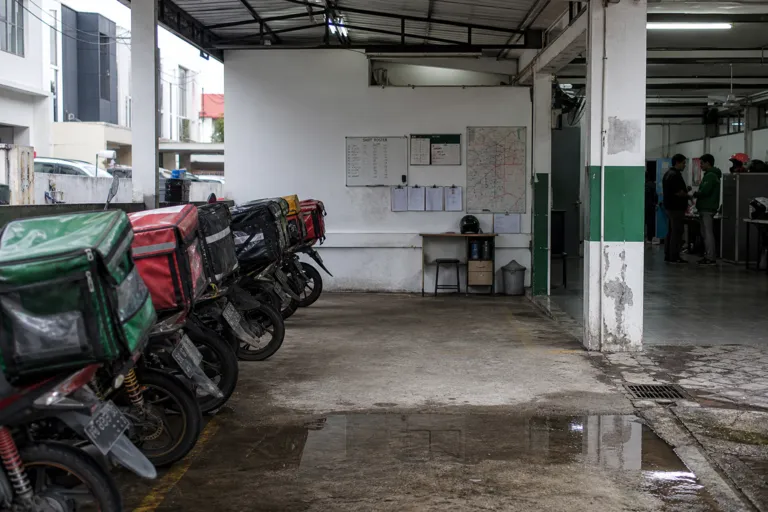
This mix creates a practical sizing problem. Informality is no longer limited to wet markets or small roadside services. Asia Times describes how digitalization blurs lines between employee and employer, formal and informal enterprises, and even household activity and corporate work. People can earn income without a storefront, a formal office, or a registered entity. Examples include home-based sellers using live streams, farmers selling seeds via digital marketplaces, and digital freelancers serving clients remotely. For market entrants, this means “informal” demand is not necessarily offline or cash-based. It can be mediated by platforms and payments that look fully formal, even when the underlying work arrangements are not captured cleanly by older statistical categories.
How to Interpret Informality: Demand Signals vs. Employment Reality
Two different lenses matter: employment informality and the broader informal economy captured in national accounts. The UNESCAP case study on measuring Indonesia’s informal sector highlights that the informal economy includes informal productive activities of persons or economic units, whether or not they are registered. That definition matters for entrants building market models, because the “addressable market” may depend on household production and unregistered micro-activity that still buys inputs, uses logistics, and responds to pricing. At the same time, labor informality changes how you recruit, train, and retain workers. With 59.42% of the workforce in informal work (BPS, May 2026), execution plans need to assume varied documentation, fluctuating availability, and nonstandard work arrangements.
Persistence is not always about enforcement gaps. The paper Rethinking Indonesia’s Informal Sector finds that a program had no effects on firms’ informality rates and did not reduce the probability that workers were informally employed. The authors argue the evidence fits a mix of “rational exit” and “dual economy” theories: some firms cater to lower-tier local demand and do not see value in formalizing, some owners are unaware of the process, and there is qualitative evidence consistent with tax evasion. For entrants, that implies formalization incentives may not automatically convert partners or suppliers. Commercial propositions should work even when counterparties choose to stay informal, while compliance and onboarding must be designed for that reality.
Finally, entrants should avoid treating this as uniquely Indonesian. The International Labour Organization (ILO) estimates that about two billion workers worldwide still depend on the informal economy. Asia Times notes that Asia’s rapid leap into mobile technology has contributed to what is recognized as “digital informality,” reinforcing that platform-led growth can coexist with informal livelihoods. In Indonesia, the key is to connect the digital growth signals (like 5.22 billion digital payment transactions in May 2026 and 95.10% QRIS growth) with labor realities (like 59.42% informality). That combined view helps entrants size hidden demand, choose channels, and set operating assumptions that match on-the-ground work patterns.
How can companies think about Indonesia’s informal economy size without a single market figure?
What recent indicators show Indonesia’s digital economy expanding fast?
Why might informality persist even when governments run formalization programs?
What is “digital informality,” and why does it matter for market entrants?