
The Nusantara Sponge City concept is not a design trend. It is a strategic response to climate risk, urban density, and long-term capital protection. Instead of forcing water, people, and nature into rigid systems, this model allows the city to behave like a living landscape. Rain is absorbed, green space is structural, and infrastructure is designed to reduce future cost, not just speed up construction.
What makes Nusantara different is not ambition alone, but coordination. Behind the scenes, a multi-layer collaboration between public authorities, private developers, and environmental specialists is reshaping how cities in Southeast Asia can be built. Recent development frameworks emerging from this work signal a deliberate move away from concrete-heavy urban growth toward integrated, nature-based systems. For decision-makers, this raises a critical question. If a capital city can be planned this way from the start, what does that mean for investment strategy, risk models, and urban assets across the region?
Forest City Collaboration Behind the Nusantara Sponge City Concept
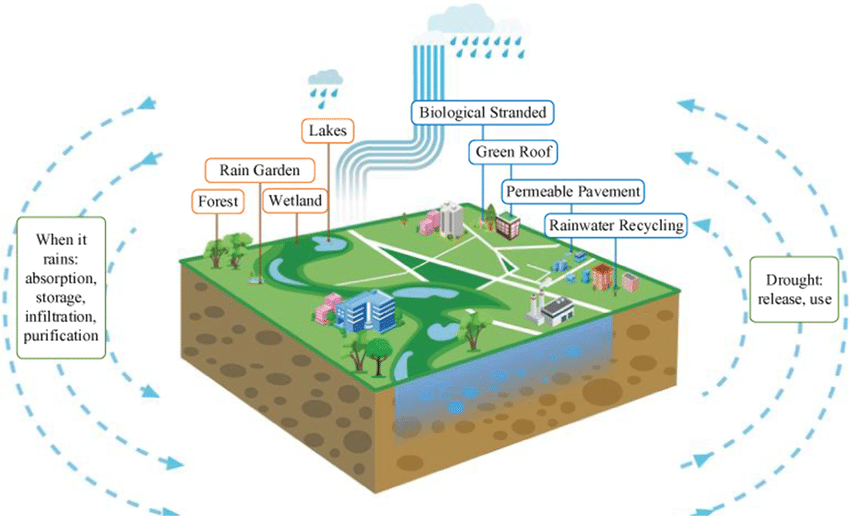
At the core of this concept is a strong public-private partnership. The Nusantara Capital Authority (OIKN) works closely with private landscape architects. Their goal is simple but bold. Keep water where it falls. Instead of fast drains, they build absorptive landscapes. These include permeable pavements and rain gardens designed to trap 100% of rainwater on-site.
This approach supports Indonesia’s legal mandate to preserve 65% of Nusantara as a tropical forest. Nature is not an afterthought. It is infrastructure. Since 2026, biophilic design standards have become mandatory for all commercial buildings in the Core Government Area (KIPP). Offices, shops, and public spaces must connect people to nature through light, airflow, and green elements.
Smart Water and the Digital Twin of Nusantara
Water is managed not only on the ground, but also in the cloud. Developers now use AI models to simulate how water moves across the city. Indonesian civil engineers collaborate with Finnish and Dutch water consultants to build a Digital Twin of Nusantara’s water table.
This Digital Twin allows real-time flood prediction before construction even begins. Planners can test scenarios, adjust land use, and reduce risk early. When the first 15,000+ ASN civil servants arrive in January and February 2026, this system becomes the stress test for the entire model.
The Blueprints for Tomorrow case study shows how public bodies, private firms, and nature now work as one. Instead of just cosmetic, this shift is structural, legal, and already being tested as Nusantara prepares for its first major population wave in 2026.
Spillover Cities Copy the Nusantara Sponge City Concept
The blueprint does not stop at the capital’s borders. Private developers in Balikpapan and Samarinda are already copying these standards. The reason is not only regulation. It is value.
Flood-proof certification is becoming a premium sales tactic in 2026. Buyers want safety and resilience. Developers see higher long-term returns. The Nusantara Sponge City concept has become a business case, not just a planning idea.
This spillover effect also attracts capital. The recent 2026 Foreign Direct Investment earmarked for green infrastructure in IKN includes interest from UAE and Singaporean firms. Investors are backing systems that lower climate risk and protect asset value.
Read Also: Inside IKN Civil Servant Housing and Its Social Ripple Effect
Biodiversity Corridors and Animal-Friendly Infrastructure
Another defining rule is the biodiversity corridor mandate. Wildlife corridors must pass through the city. This forces construction firms to innovate. To win government tenders, they now design animal-friendly infrastructure.
Examples include canopy bridges for primates and safe crossings that keep habitats connected. These features reflect the broader theme of collaborative urban development. Economic growth and biodiversity protection move together, not apart.
Why the Nusantara Sponge City Concept Matters for Business
The Nusantara Sponge City concept shows how collaboration creates new investment paths. It links water security, biodiversity, and property value into one system. For companies and investors, understanding this model is no longer optional. To explore these opportunities in depth according to your business needs, contact Market Research Indonesia by Eurogroup Consulting. With 40 years of distinguished experience, Eurogroup Consulting excels in strategic consulting and market research in Indonesia. Our team provides the insights and local support needed to succeed in Indonesia’s fast-changing market.