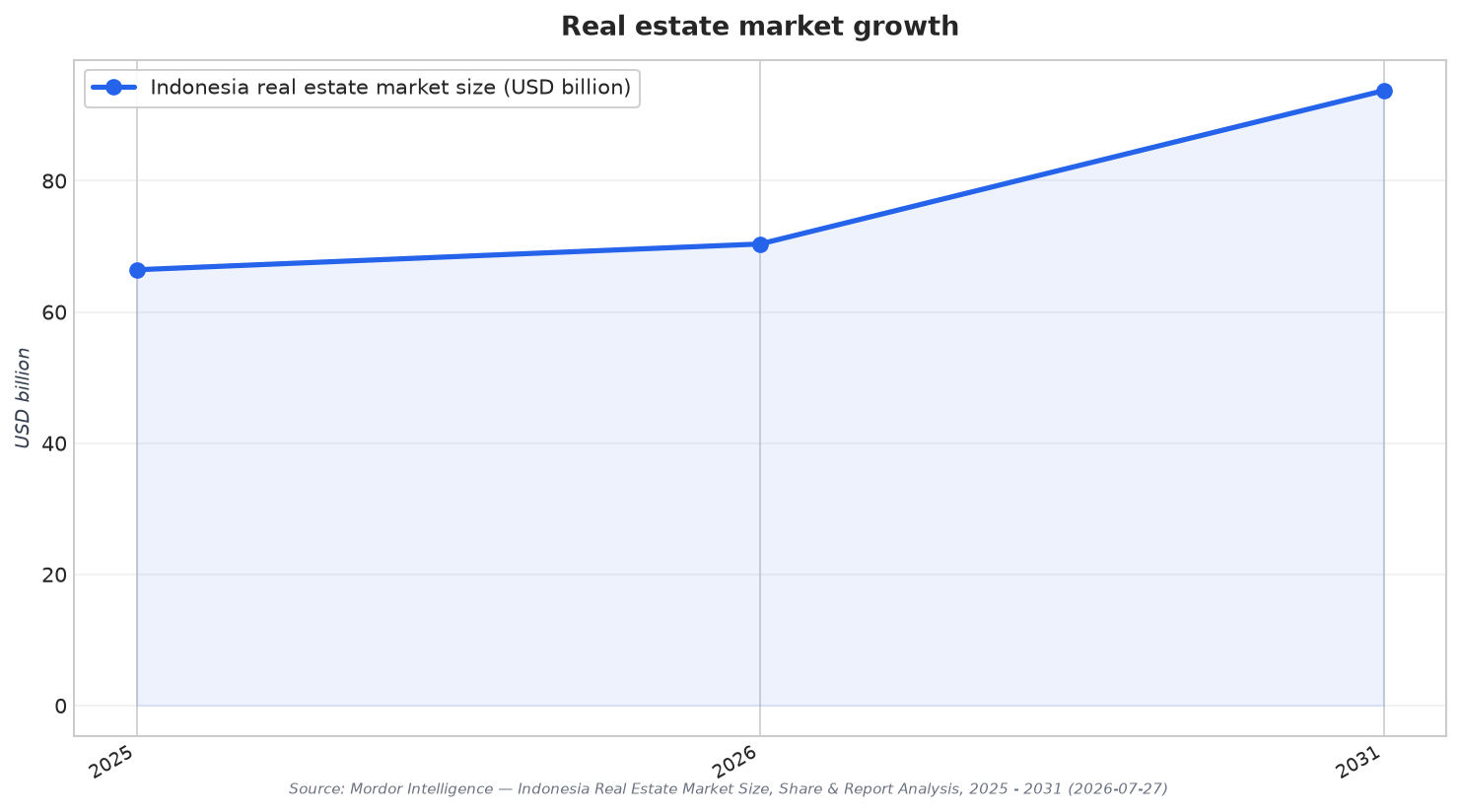
Manufacturers are rethinking where to place capacity inside Indonesia in 2026, and the decision is increasingly tied to land access, lease structures, and local execution speed. Real estate and industrial-land dynamics are shaping plant and warehouse location choices as much as labor planning. Mordor Intelligence projects Indonesia’s real estate market to expand from USD 66.44 billion in 2025 and USD 70.37 billion in 2026 to USD 93.75 billion by 2031, with a CAGR of 5.91% from 2026 to 2031. Within that expansion, investors are described as shifting capital from Jakarta to second-tier hubs in West and East Java, chasing lower land costs and port connectivity, which changes how manufacturers evaluate their own footprint.
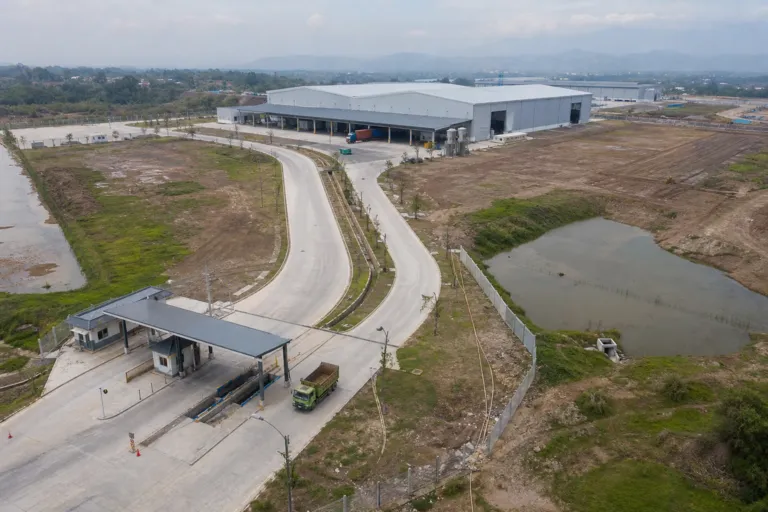
Land availability and how it is packaged for tenants are pushing more companies to consider secondary-city industrial ecosystems rather than competing head-on for space in saturated corridors. MarkWide Research notes that modular lease packaging with built-in fit-out and facility management bundles is restructuring tenant decision-making in Indonesian commercial property. The same source highlights that five developer groups control prime industrial land parcels in Jakarta’s buffer zones, concentrating land banking and limiting entry for new institutional investors. For manufacturers, this concentration can translate into fewer options and more standardized offerings near the core, which can make emerging industrial zones—where absorption is accelerating—more strategically appealing.
Wages, Land, and Incentives: A 2026 Location Equation
Cost and capability considerations are moving together, not separately. The-shiv describes government promotion of digital manufacturing and Industry 4.0 through incentives for smart factories, automation, and digital supply chains, tied to the “Making Indonesia 4.0” roadmap and pilot programs in textiles, food, and automotive parts. That incentive backdrop intersects with practical site selection: modern logistics facilities in Indonesia are often structured as strata titles, long-term leases (HGB), or build-to-suit arrangements, with floor plates exceeding 2,000 square meters for modern logistics facilities, according to MarkWide. In parallel, Market Prospects frames Indonesia among Vietnam, Thailand, and Malaysia as absorbing manufacturing relocation from higher-cost regions, supported by government incentive programs, particularly across electronics assembly, garment manufacturing, precision components, and consumer goods production.
Logistics demand is also changing the map inside Java, creating new hotspots that can pull production and distribution closer together. MarkWide reports that e-commerce fulfillment networks are compressing warehouse absorption timelines across Java’s logistics corridors, pushing developers toward speculative construction ahead of tenant commitment. It also notes that the office and logistics segments lead transaction velocity, pointing to activity in Jakarta’s CBD fringe and the Bekasi-Cikarang industrial corridors. Critically for internal relocation decisions, MarkWide states that manufacturing relocation from saturated Java markets is accelerating absorption in East Java’s emerging logistics parks, aligning with Mordor’s forecast that East Java is expected to expand at a 7.11% CAGR through 2031 while DKI Jakarta held a 39.4% revenue share in 2025.
Policy mechanics and compliance speed matter because they affect when a facility can start operating and how predictable expansion will be across provinces. MarkWide says Indonesia’s Omnibus Law on Job Creation, administered by the Ministry of Agrarian Affairs and Spatial Planning, accelerated land-use conversion permits for industrial zones and streamlined land-use conversion permits for industrial-zone projects in the Bekasi-Cikarang corridor. The same source adds that BSI building codes and regional spatial plans (RTRW) enforced by provincial governments dictate density bonuses and green building thresholds, shaping development feasibility and requiring firms to monitor consistency across provincial boundaries. Put together, Indonesia factory relocation in 2026 is less about a single driver and more about balancing land access, logistics readiness, and the ability to capture incentives while staying compliant.
Why are manufacturers relocating within Indonesia in 2026?
What role does East Java play in intra-Indonesia site shifts?
How does land banking affect industrial location decisions near Jakarta?
What incentives are connected to modern manufacturing upgrades in Indonesia?