When people talk about Indonesia’s halal economy, certification is usually the starting point. But the investment case is increasingly about how big the ecosystem is and where the next growth pockets sit. Multiple sources describe Indonesia as “the beating heart” of the global halal economy, anchored by 229 million Muslims, the largest Muslim population in the world. For the Indonesia halal economy market size discussion, the same sources put the 2023 halal market value at about US$279 billion, and project growth at a 14.2% CAGR to about US$807 billion by 2030. Those figures frame why modest fashion and halal tourism are frequently cited as priority opportunity areas alongside food and beverages.
Food and beverages are still the anchor sector, and they also show what “beyond certification” can look like in practice. HalalFocus reports that Indonesian Muslim consumers spent about US$149 billion on halal food and beverages in 2022, with projections reaching US$258.02 billion by 2030 at a CAGR of 6.78% (2023 to 2030). On the trade side, halal food exports were valued at US$42.33 billion in 2023, and about US$13 billion of exports went to OIC countries in 2022. Ken Research separately values the Indonesia halal food and beverage industry market at about US$282 billion (based on a five-year historical analysis) and points to the Halal Product Assurance Law (Law No. 33 of 2014) and Government Regulation No. 42 of 2024, issued by BPJPH, as part of the regulatory backdrop shaping demand.
Modest Fashion: Competitive Momentum, but Ecosystem Gaps
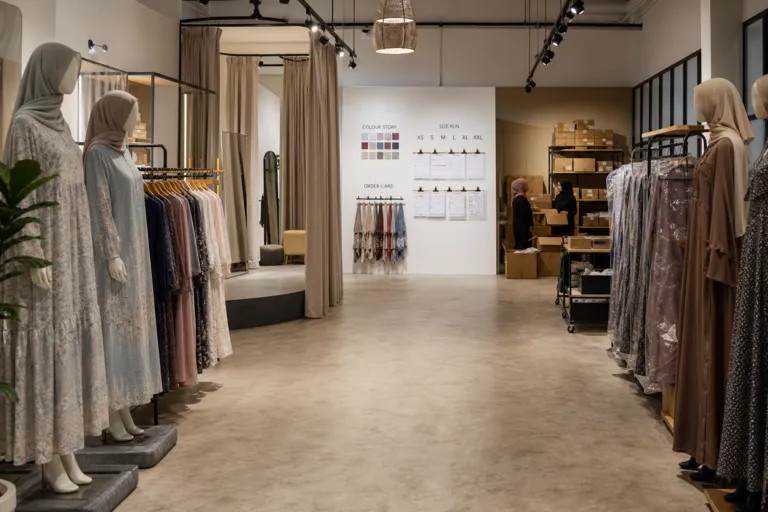
Indonesia’s modest fashion upside is not only about a large domestic base; it is also about positioning in global benchmarks. A qualitative study on Indonesia’s modest fashion industry reports that Indonesia’s “simple fashion” sector score in the Global Islamic Economic Indicator increased from 2018 to 2021 and placed Indonesia in the top 10. Another study in the ASEAN Journal of Halal Study says Indonesia has strong potential to develop its halal fashion industry and position itself as a global reference, citing a leading ranking in the State of the Global Islamic Economy Report (2024) through the Indonesia Global Halal Fashion (IGHF) initiative. The same modest fashion research also highlights execution barriers: financing access, limited international market access, weak standardization, inadequate human capital, and coordination challenges across institutions.
Halal tourism is repeatedly named as a key opportunity area in the same ecosystem conversation, even when specific tourism spending numbers are not provided in the cited materials. The modest fashion industry paper lists halal tourism potential among Indonesia’s strengths, while also describing weaknesses that can spill across subsectors: inadequate infrastructure, limited human resource capacity, high certification costs, weak institutional coordination, and restricted global access. In that context, “beyond certification” means building the enabling layer that tourism and fashion both need: stronger branding, better technology adoption, and clearer ecosystem integration. This is consistent with the broader sector framing that Indonesia’s halal economy covers more than consumables, extending into lifestyle services and consumer goods categories that rise with the middle class and the digital economy.
For businesses sizing the next move, the key is to separate compliance from competitiveness. Compliance is increasingly supported by government policy, while growth depends on scaling capabilities that reduce friction for MSMEs and help brands meet international standards. The same sources that describe strong demand also describe practical hurdles such as fragmented governance and low certification awareness among MSMEs. At the same time, examples of global brands adapting to Indonesia’s halal requirements—HalalFocus cites McDonald’s and KFC operating in strict compliance across supply chains and preparation processes—show that consistent standards can coexist with large-scale operations. The upside in modest fashion and halal tourism will likely belong to players that treat certification as table stakes and build differentiated products, credible branding, and export-ready operations on top of it.
What do sources say about Indonesia’s halal economy market size?
How large is Indonesia’s halal food and beverage demand in the sources?
What export figures are cited for Indonesia’s halal food sector?
What evidence is cited for Indonesia’s modest fashion competitiveness?
What challenges could limit modest fashion and halal tourism growth?