Indonesia is preparing to activate a full-scale carbon market by June 2026, with the rollout anchored in Presidential Regulation No. 110 of 2025. The rules set out mechanisms for emissions trading and carbon credits, require registration of carbon units in a national system, and include safeguards to prevent double counting. For corporate buyers and sellers, this changes the order of operations. Strategy now starts with governance, controls, and a clear internal decision path for what the company will buy, sell, or bank, and how those units will be reflected in ESG reporting and risk management.
As corporates build an Indonesia carbon credit advisory workplan, the first practical checkpoint is registry and eligibility. Indonesia’s national carbon registry, Sistem Registri Nasional (SRN), tracks all compliance and voluntary credits, supporting transparency and traceability. Presidential Regulation No. 110 of 2025 is also described as introducing corresponding adjustments, registry integration, and full transparency standards, aligning Indonesia’s framework with international best practice. For investors and corporations, one stated strategic priority is to focus on LoA-authorized and Article 6–aligned credits, understand corresponding adjustment mechanisms, and build portfolios that reflect emerging national and international policies.
What Corporate Carbon Credit Strategy Should Cover Before the Market Expands
Corporates also need to separate compliance and voluntary use cases, because Indonesia’s market is segmented by credit type into Compliance Credits, Voluntary Credits, and Others. Ken Research notes that the Compliance Credits segment is currently leading the market due to stringent government regulations and increasing corporate accountability toward emissions reduction. On the supply side, project types commonly referenced include Renewable Energy, Nature-Based Solutions, Industrial Emission Reduction, and Waste Management, with Renewable Energy described as the dominant segment. That context helps buyers define what fits their decarbonization story and helps asset owners prioritize which projects to originate and which verification routes to pursue.
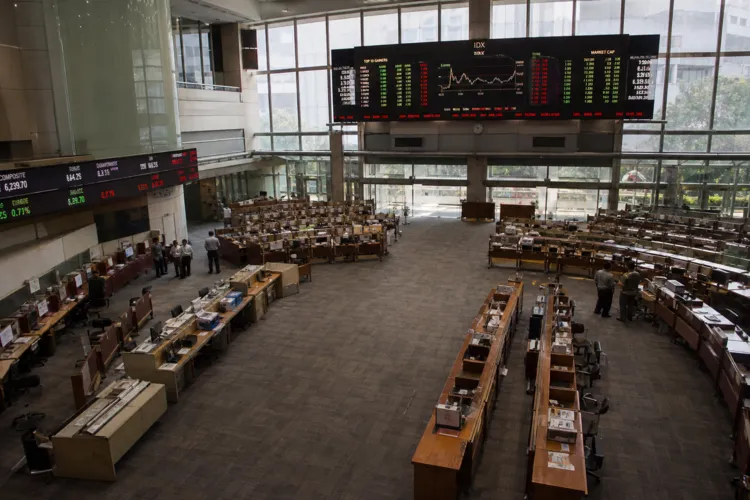
Market signals are already visible in trading activity and pricing. Indonesia launched its own carbon exchange in 2023 through the Indonesia Stock Exchange (IDX), and during its first year it traded about 500,000 tonnes of CO₂e, worth around $5 million. By 2024, more than 2,000 carbon projects were registered, spanning areas like energy, forestry, and manufacturing. Pricing differentials matter for budget forecasts and procurement timing: Indonesia’s credits often sell for under $20 per tonne, while high-quality global credits range from $40 to $80 per tonne. This is a useful benchmark for corporates comparing domestic units to international alternatives and setting internal price corridors.
Finally, corporates should plan for the international pathway and platform landscape. Indonesia re-entered international carbon trading in October 2025 through Presidential Regulation No. 110 of 2025, and it has reconnected projects to global markets through Mutual Recognition Agreements (MRAs) with Gold Standard, Plan Vivo, Global Carbon Council, and Verra. Indonesia also plans to sell 13.4 billion tonnes of CO₂e credits to global buyers, with credit sources cited as forest protection, peatland restoration, renewable energy, and carbon capture programs. On platforms and counterparties, Ken Research lists a mix of participants including IDX Carbon (PT Bursa Efek Indonesia), CarbonX, AirCarbon Exchange (ACX Indonesia), and South Pole Indonesia, among others. A corporate strategy should decide where to trade, how to document unit quality, and how to align procurement with evolving transparency requirements.
When is Indonesia expected to activate a full-scale carbon market?
What is SRN, and why does it matter for corporate credit strategy?
What should an Indonesia carbon credit advisory prioritize for cross-border readiness?
What early market signals exist on trading volume and pricing in Indonesia?
How large is Indonesia’s stated plan for selling carbon credits to global buyers?